


Neck Pain Relief & Better Sleep Guide
Expert tips, guides & sleep wellness advice to help you wake up refreshed every day.
Neck Pain Relief & Better Sleep Guide
Expert tips, guides & sleep wellness advice to help you wake up refreshed every day.
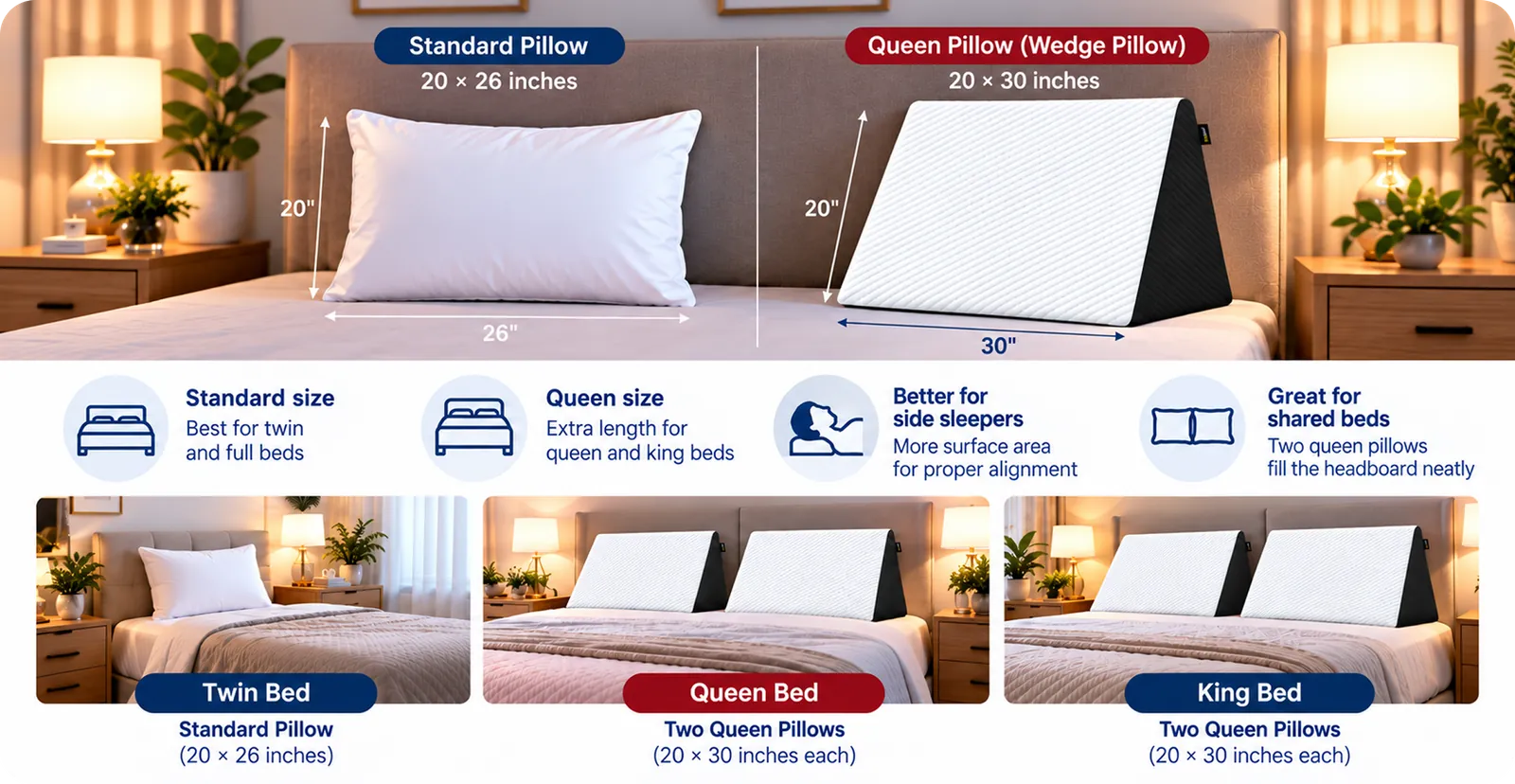
How to Choose the Right Pillow Size for Your Bed (Queen vs Standard)
Pillow size is easy to overlook, but the wrong dimensions can throw off both the look of your bed and how well the pillow actually supports you. It also helps to know where standard and queen fit among the other common sizes out there.
Why Pillow Size Matters Beyond Aesthetics
Pillow size affects more than how your bed looks — it determines how much surface area is available to support your head and shoulders, especially if you shift positions during the night.
Why it matters
A pillow that's too small for your bed or body can leave your shoulder unsupported when you turn onto your side, while an oversized pillow on a smaller bed can crowd your sleeping space and throw off alignment.
Getting the size right is as much about function as it is about how your bed looks made up.
Standard vs Queen: The Practical Differences
The two most common pillow sizes serve slightly different purposes, and the right one depends on your bed size and how you sleep.
Comparing the two
- Standard pillow: Typically around 20x26 inches, best suited to twin and full beds.
- Queen pillow: Around 20x30 inches, offering extra length that suits queen and king beds.
- Side sleepers: Often benefit from the added surface area a queen size provides.
- Multiple pillows: Queen sizing allows two pillows to comfortably fill a queen or king headboard.
If you're unsure, matching pillow size to your actual bed size is the simplest rule of thumb.
Matching Size to Your Sleep Style
Beyond your mattress size, how you personally sleep should factor into the decision too.
What to consider
Side sleepers generally benefit from the extra length of a queen pillow, since it gives more room to keep the head and neck aligned through position changes. Back sleepers on smaller beds may find a standard size perfectly adequate, as long as the shape and material still provide proper neck support.
Size should complement good support, not replace it — the right shape and material still matter most.
Other Sizes Worth Knowing
Standard and queen aren't the only options — a couple of other common sizes can be worth considering depending on your setup.
Beyond standard and queen
- King pillow: Around 20x36 inches, ideal for king beds or anyone who likes extra room to move.
- Body pillow: Long, full-body support useful for side sleepers or during pregnancy.
- Travel or toddler size: Compact sizing for non-bed use rather than everyday nightly sleep.
- Euro square: Typically used for decorative back support rather than primary head support.
For everyday sleep, standard and queen cover most needs — the other sizes serve more specific situations.
How Sharing a Bed Changes the Calculation
Pillow sizing decisions often change once you factor in a partner sharing the same bed, since space and preferences need to work for two people rather than one.
What to consider
Queen or king pillows generally work better in shared beds, since they give each person a clearly defined space without pillows overlapping or sliding together during the night. If you and your partner have different support needs, choosing the same size but different firmness or materials is often more practical than trying to compromise on a single pillow that suits neither of you well.
Sizing for two doesn't have to mean identical pillows — just pillows that fit the shared space comfortably.
Getting the Fit Right
Pillow size is a small detail that's easy to get wrong by default, simply by not thinking about it. Matching size to both your bed and your sleep habits ensures the pillow actually does its job, rather than just filling space on the mattress. When in doubt, sizing up slightly rarely hurts comfort, while sizing down can leave your shoulder or neck without enough surface to rest on — so lean toward the larger option if you're torn between two sizes. Once you've settled on the right size, pair it with the right shape and material, since size alone can't compensate for a pillow that doesn't otherwise support your neck. If you're unsure which size will work best, many retailers now offer trial periods specifically so you can test the real-world fit before fully committing. If you also want elevation for reading or back support, a wedge pillow for sleeping is worth considering alongside a standard pillow.
The right size makes sure your pillow supports you fully, not just partially.
Search Blogs
Categories



Stay Updated With Sleep Tips & Offers
Join our newsletter and get expert sleep tips, new product updates & exclusive offers.
No spam, ever. Unsubscribe anytime.

Related Blogs
Keep reading for more tips on better sleep, posture and neck comfort.
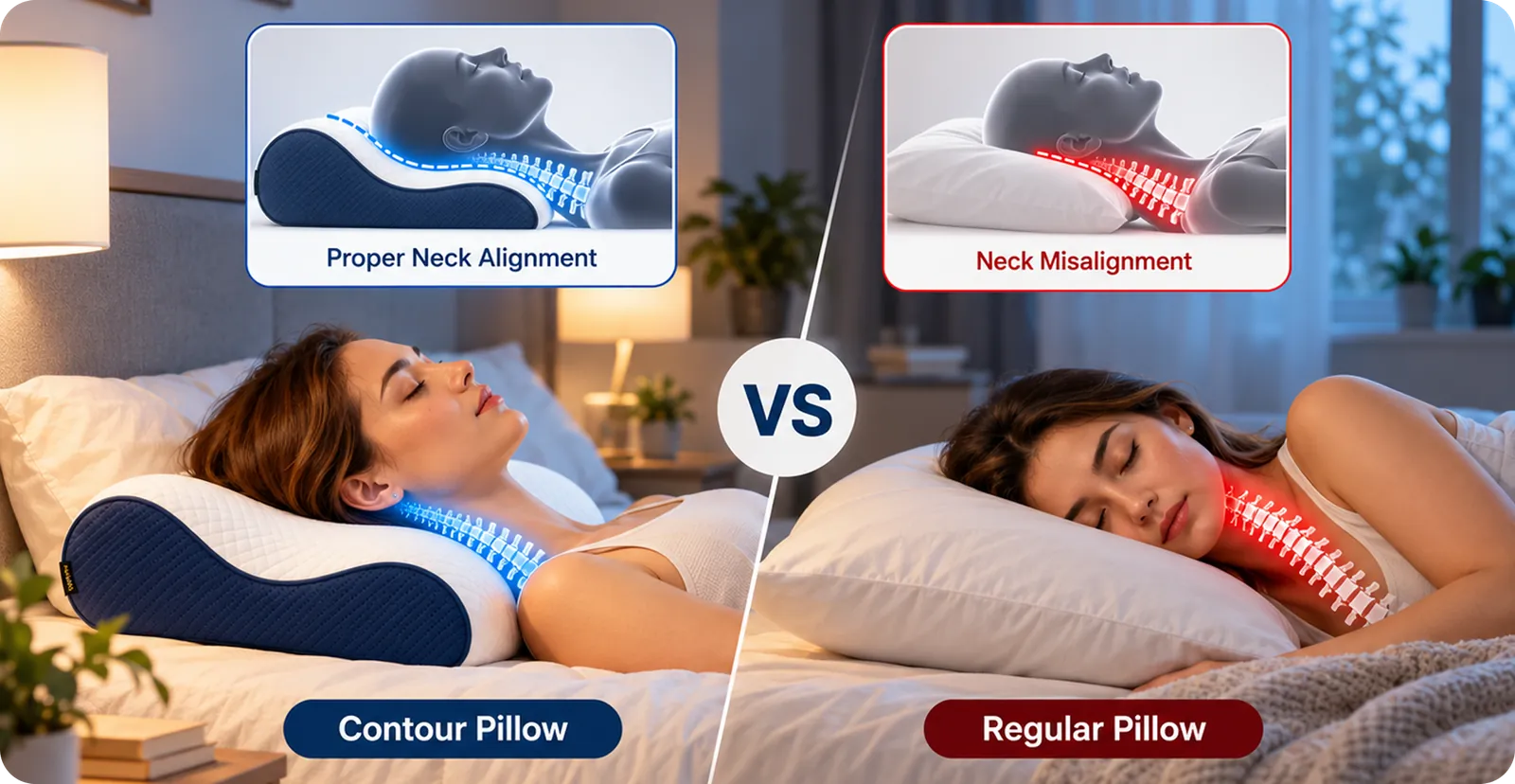
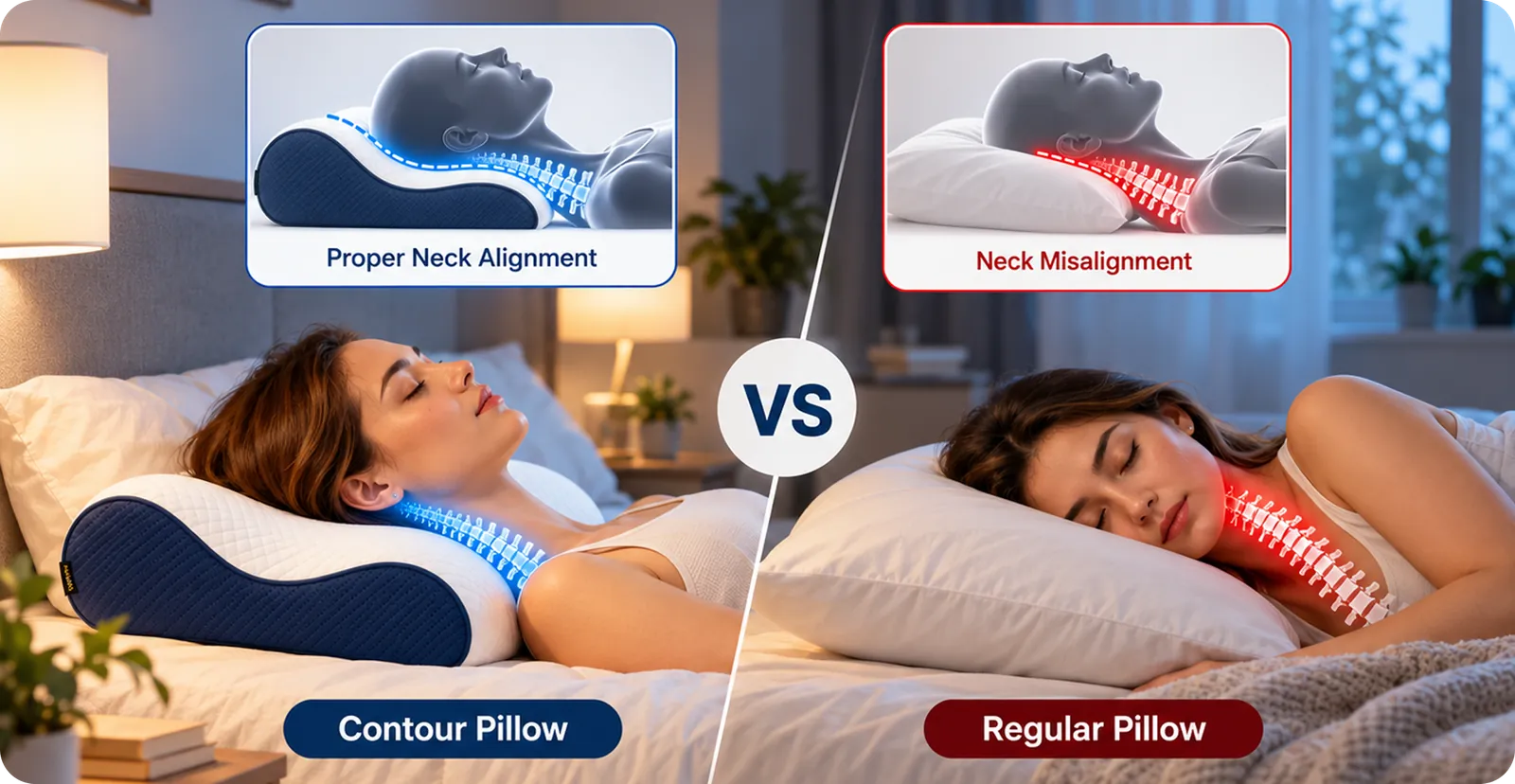
Contour vs Regular Pillow: Which One Is Right for Your Sleep Style?
Contour and regular pillows support your body differently. Compare shape, firmness and sleep-position fit to find which is right for your sleep style.
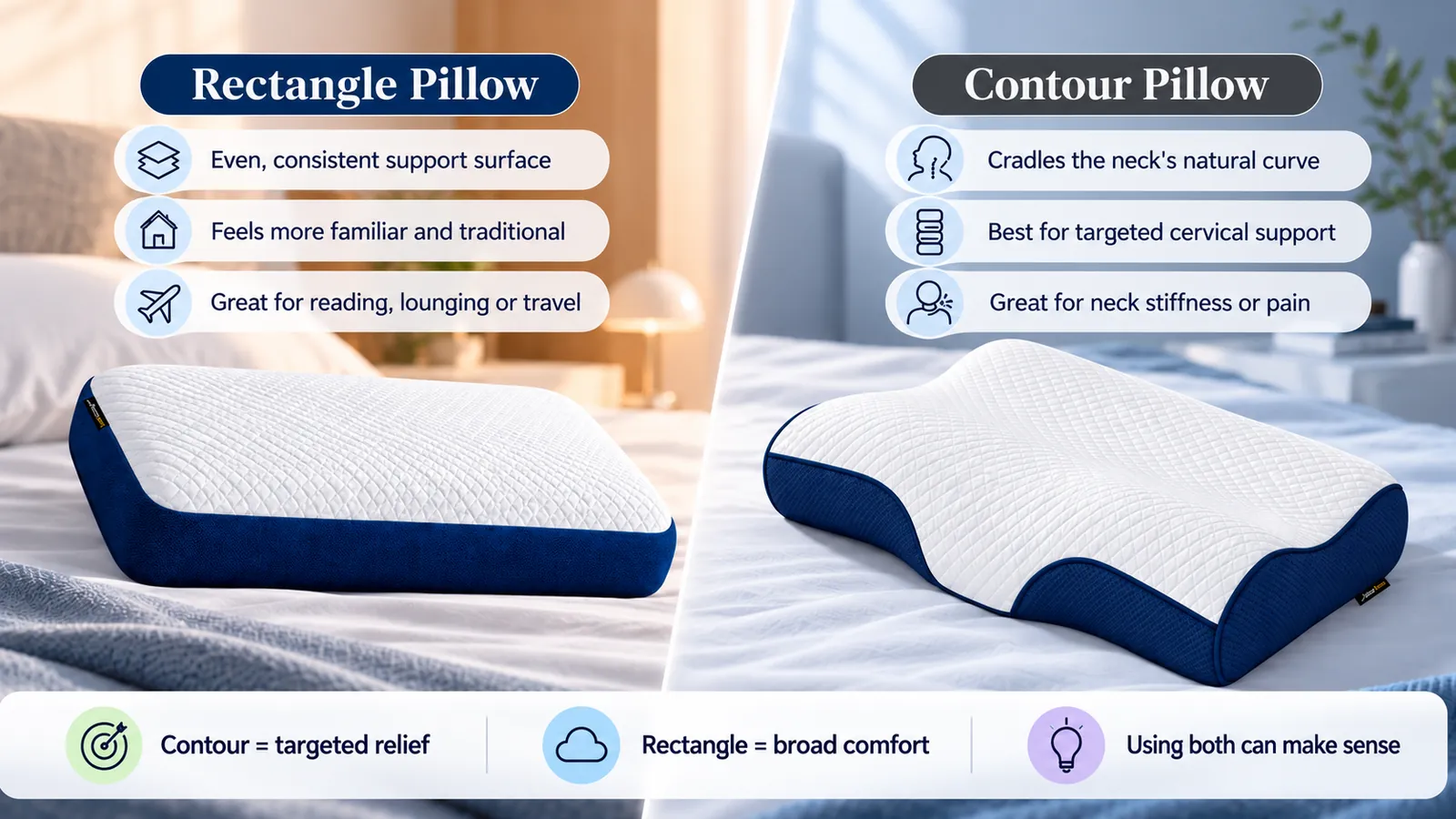
Rectangle vs Contour Neck Pillows: Which Shape Suits You Best?
Pillow shape matters as much as material. Compare rectangle and contour neck pillows to see which design best matches your sleep posture and needs.

How Sleep Quality Affects Your Immune System and Daily Energy
Poor sleep does more than tire you out — it weakens immunity and drains daily energy. Learn how sleep quality impacts your health and how to improve it.

Text Neck Syndrome: Causes, Symptoms and How to Fix It
Constant phone use can cause 'text neck.' Learn the symptoms of text neck syndrome, what causes it, and practical ways to relieve and prevent it.
Frequently Asked Questions
See what our customers have to say.
Wake Up With Better Neck Support
Premium memory foam bed pillow designed for comfortable, everyday neck support and restful sleep.
Explore Bed Pillow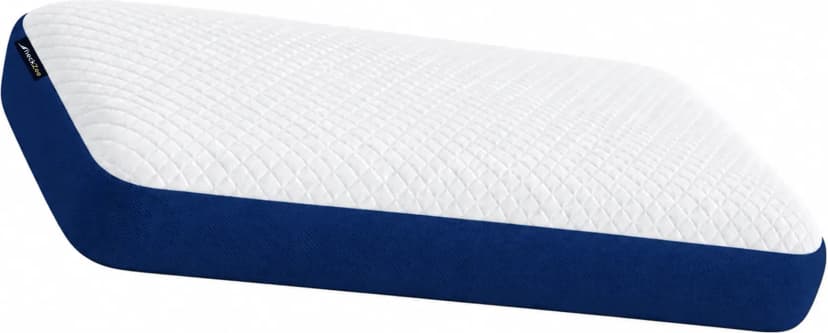

Free Shipping
Pan India

7 Days
Money Back

Secure Payment
UPI & Cards

Designed for
Better Sleep