


Neck Pain Relief & Better Sleep Guide
Expert tips, guides & sleep wellness advice to help you wake up refreshed every day.
Neck Pain Relief & Better Sleep Guide
Expert tips, guides & sleep wellness advice to help you wake up refreshed every day.
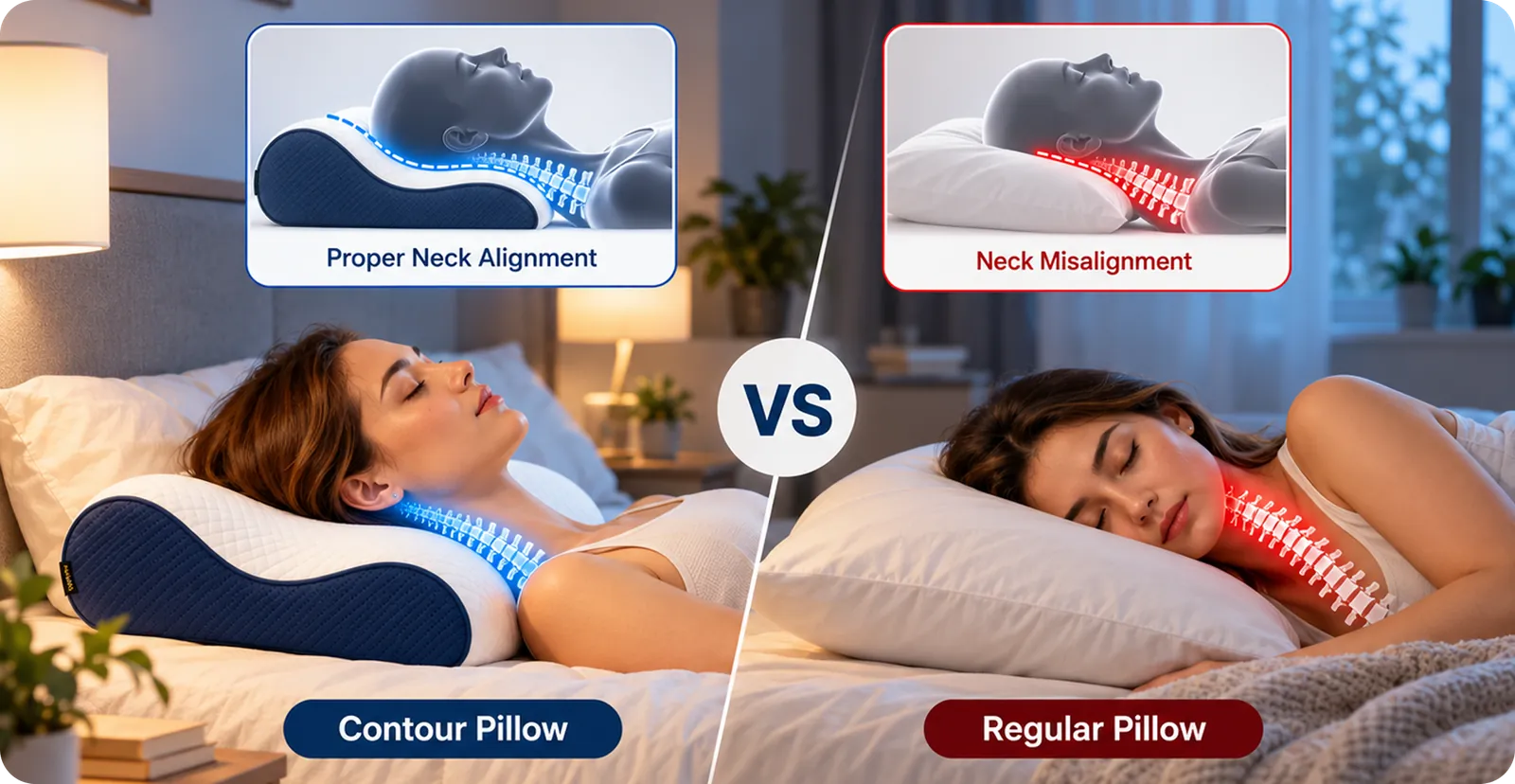
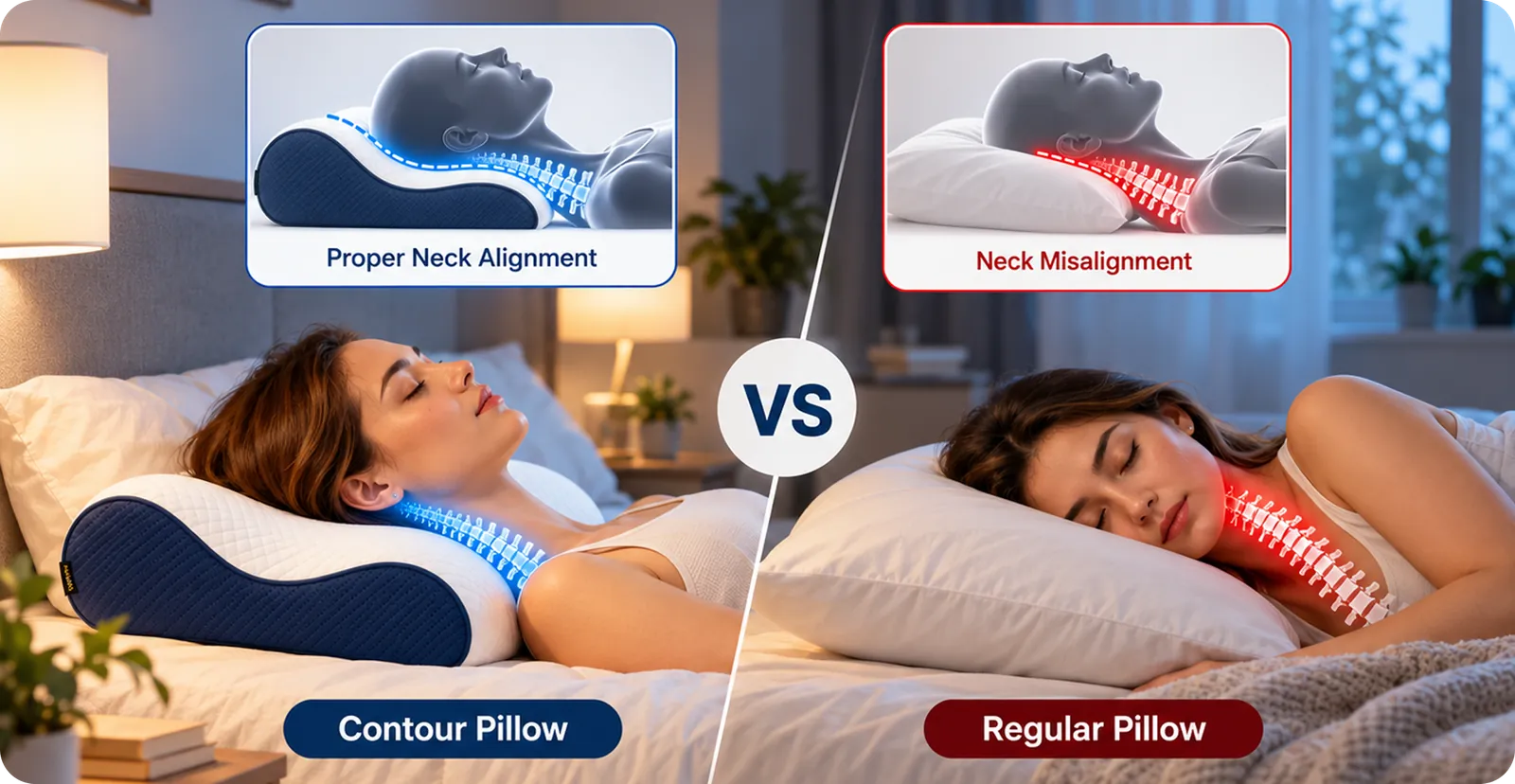
Contour vs Regular Pillow: Which One Is Right for Your Sleep Style?
Not all pillows are built to do the same job. Understanding the real difference between contour and regular pillows can save you months of waking up with a stiff neck. Getting this decision right can mean the difference between a pillow you replace in months and one you rely on for years.
What Sets a Contour Pillow Apart
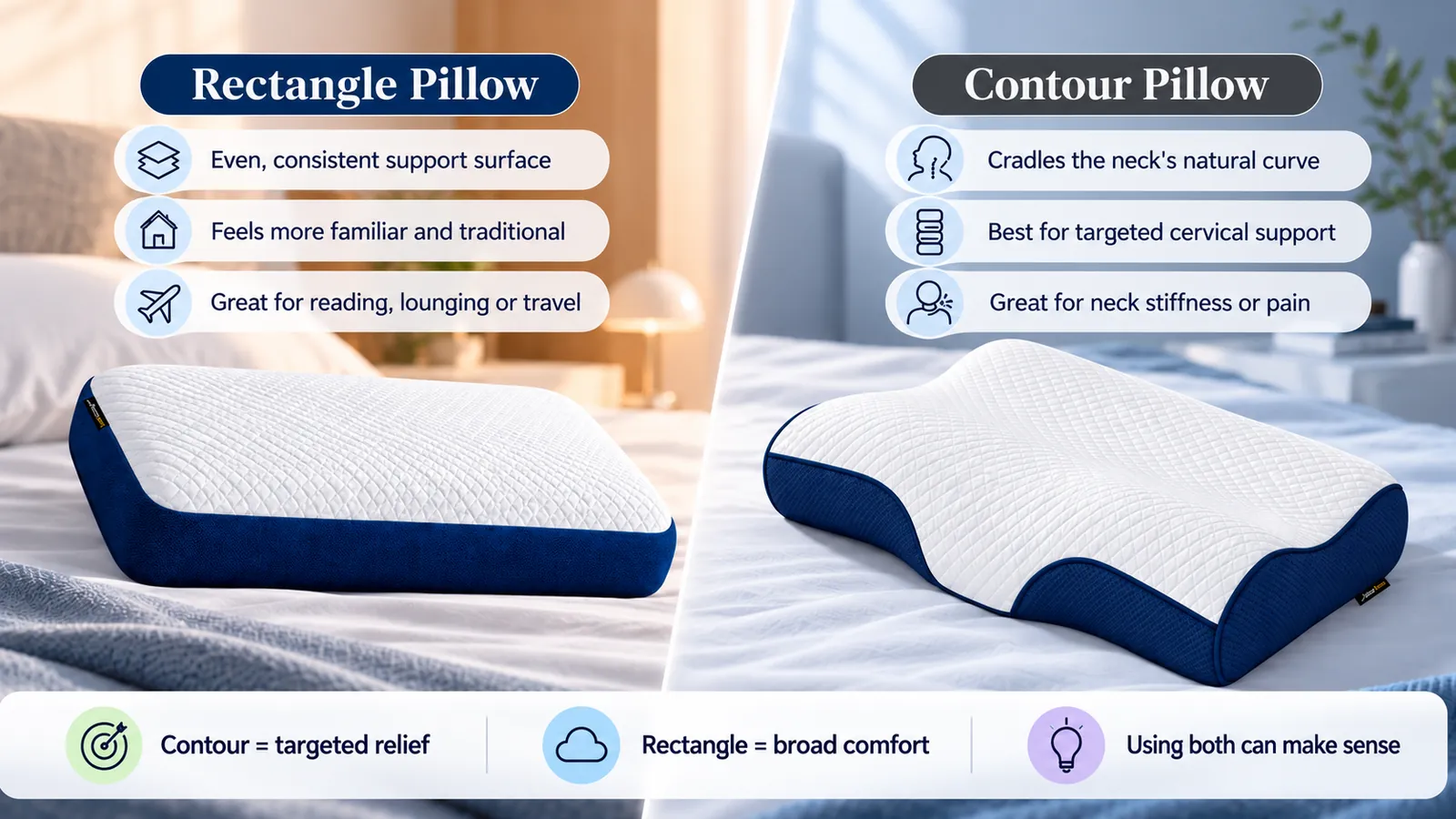
A contour pillow is shaped with raised edges and a dipped center, designed to cradle your neck's natural curve and keep your spine aligned regardless of whether you sleep on your back or side. A regular pillow, by comparison, is a uniform block of fill with no built-in support structure.
Why it matters
Without contouring, a regular pillow relies entirely on loft and softness to fill the gap between your neck and the mattress — which often means your neck either sinks too low or stays propped too high, both of which strain the cervical spine over a full night's sleep.
The shape isn't just a design choice — it's the difference between passive cushioning and active support.
Comparing the Two Side by Side
The right choice depends less on which pillow is 'better' overall and more on what your body actually needs while you sleep.
Key differences
- Neck support: Contour pillows maintain cervical alignment; regular pillows offer general cushioning only.
- Sleep position fit: Contour pillows adapt well to back and side sleepers; regular pillows suit stomach sleepers better.
- Material response: Memory foam contour pillows hold their shape; regular pillows compress and flatten faster.
- Best for: Contour pillows suit neck pain and stiffness; regular pillows suit those who prioritize a plush, traditional feel.
If neck discomfort is part of your daily reality, the shape difference alone can make a noticeable impact.
How to Decide What's Right for You
Think about how you actually sleep most nights, not just how you fall asleep — most people shift positions throughout the night.
Questions worth asking
Do you wake up with neck or shoulder stiffness? Do you sleep mostly on your back or side rather than your stomach? If either answer is yes, a contour design is built specifically for that situation. If you sleep primarily on your stomach or simply prefer a softer, more traditional feel, a regular pillow may suit you better.
There's no universally 'correct' pillow — only the one that matches how your body actually rests.
What to Check Before You Buy
Beyond the basic shape difference, a few practical details determine how well either pillow actually performs once you're using it every night.
Quick checklist
- Loft height: Should match the gap between your neck and mattress for your sleep position.
- Firmness: Too soft and support collapses; too firm and pressure points build up.
- Material breathability: Matters more for hot sleepers regardless of shape.
- Trial period: A real-world adjustment period reveals more than a quick in-store test.
These details often matter more day-to-day than the shape debate alone, so weigh them alongside contour versus regular.
What Customers Commonly Report
Beyond the technical comparison, real-world feedback from people who've switched between pillow types offers a useful practical perspective.
Common experiences
- Adjustment period: Most contour pillow users report a short adaptation window before it feels natural.
- Reduced night waking: Many side and back sleepers report fewer position changes overnight.
- Preference by sleep type: Stomach sleepers most often prefer regular pillows or very low-profile options.
- Longevity: Contour foam pillows are frequently reported to hold their shape longer than fiber-filled regular pillows.
While individual experiences vary, these patterns align closely with what the shape and material differences would predict.
The Right Shape Makes the Difference
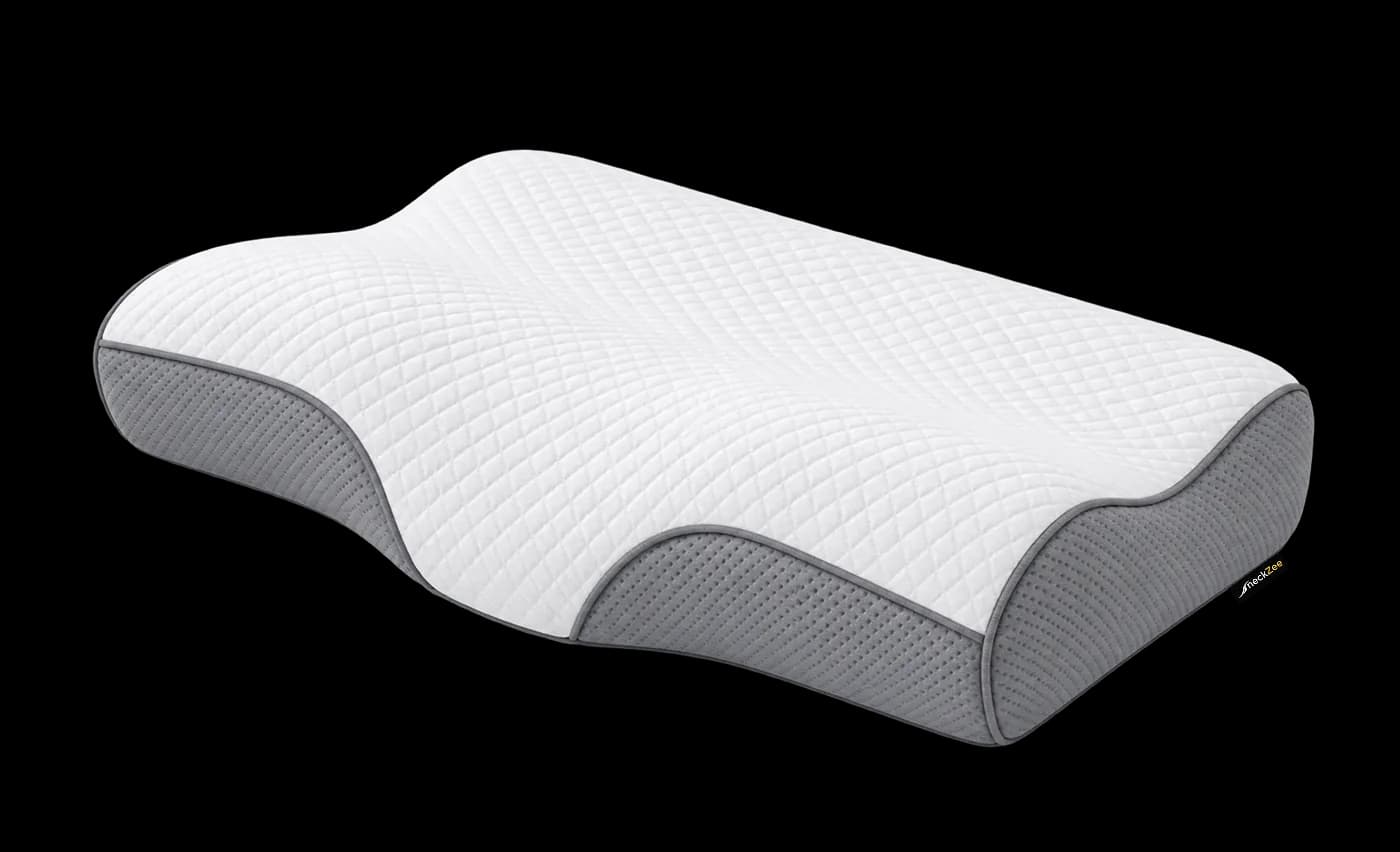
Pillow shopping often focuses on softness or fill material, but shape is what determines whether your neck is actually supported through the night. For back and side sleepers dealing with recurring neck tension, a contour design addresses the root cause rather than just adding more cushioning. Whichever shape you land on, give it a genuine adjustment period — a week or two — before deciding it isn't working, since your neck and shoulders need time to adapt to a new support pattern. If after that trial period something still feels off, don't hesitate to reconsider — comfort and support should both be non-negotiable, and neither type of pillow is worth persisting with if it isn't genuinely working for your neck. If you want to try the contoured option, an orthopedic neck pillow for sleeping is built around exactly this shape.
The right pillow shape does the support work your body can't do for itself while you sleep.
Search Blogs
Categories



Stay Updated With Sleep Tips & Offers
Join our newsletter and get expert sleep tips, new product updates & exclusive offers.
No spam, ever. Unsubscribe anytime.

Related Blogs
Keep reading for more tips on better sleep, posture and neck comfort.
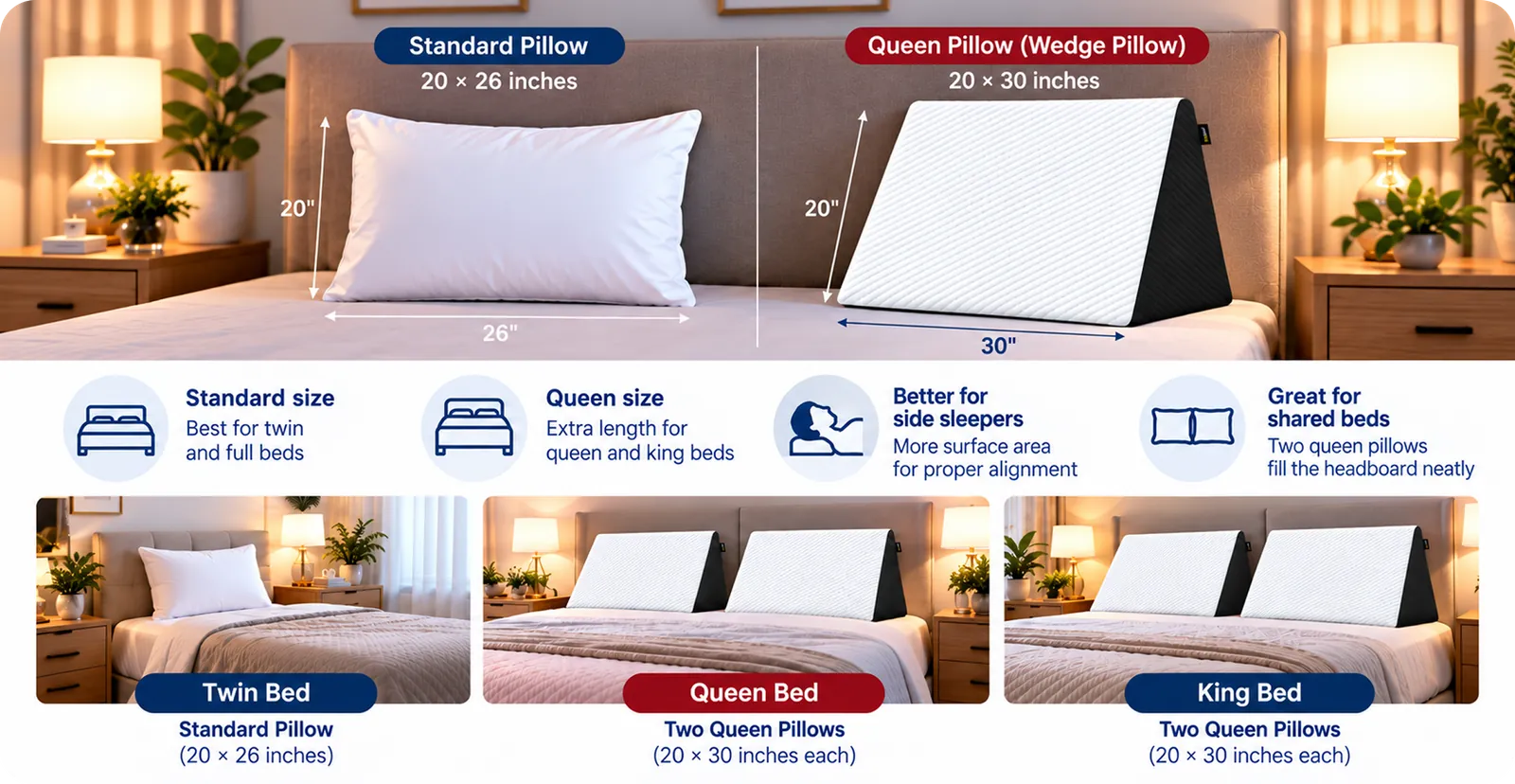
How to Choose the Right Pillow Size for Your Bed (Queen vs Standard)
Queen, standard or something else? Learn how pillow size affects comfort and bed proportion, and how to pick the right fit for your bed and body.
Rectangle vs Contour Neck Pillows: Which Shape Suits You Best?
Pillow shape matters as much as material. Compare rectangle and contour neck pillows to see which design best matches your sleep posture and needs.

How Sleep Quality Affects Your Immune System and Daily Energy
Poor sleep does more than tire you out — it weakens immunity and drains daily energy. Learn how sleep quality impacts your health and how to improve it.

Text Neck Syndrome: Causes, Symptoms and How to Fix It
Constant phone use can cause 'text neck.' Learn the symptoms of text neck syndrome, what causes it, and practical ways to relieve and prevent it.
Frequently Asked Questions
See what our customers have to say.
Wake Up With Better Neck Support
Premium memory foam bed pillow designed for comfortable, everyday neck support and restful sleep.
Explore Bed Pillow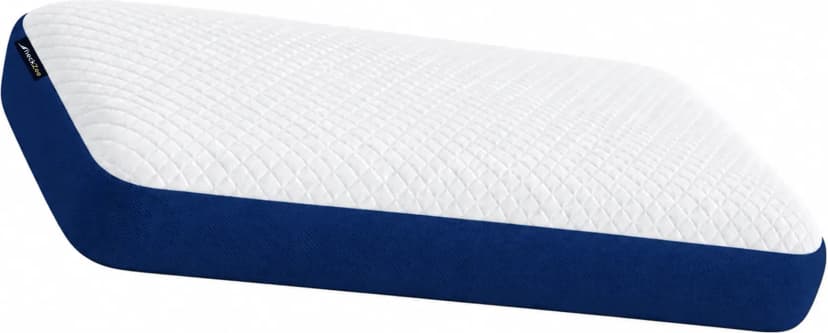

Free Shipping
Pan India

7 Days
Money Back

Secure Payment
UPI & Cards

Designed for
Better Sleep