

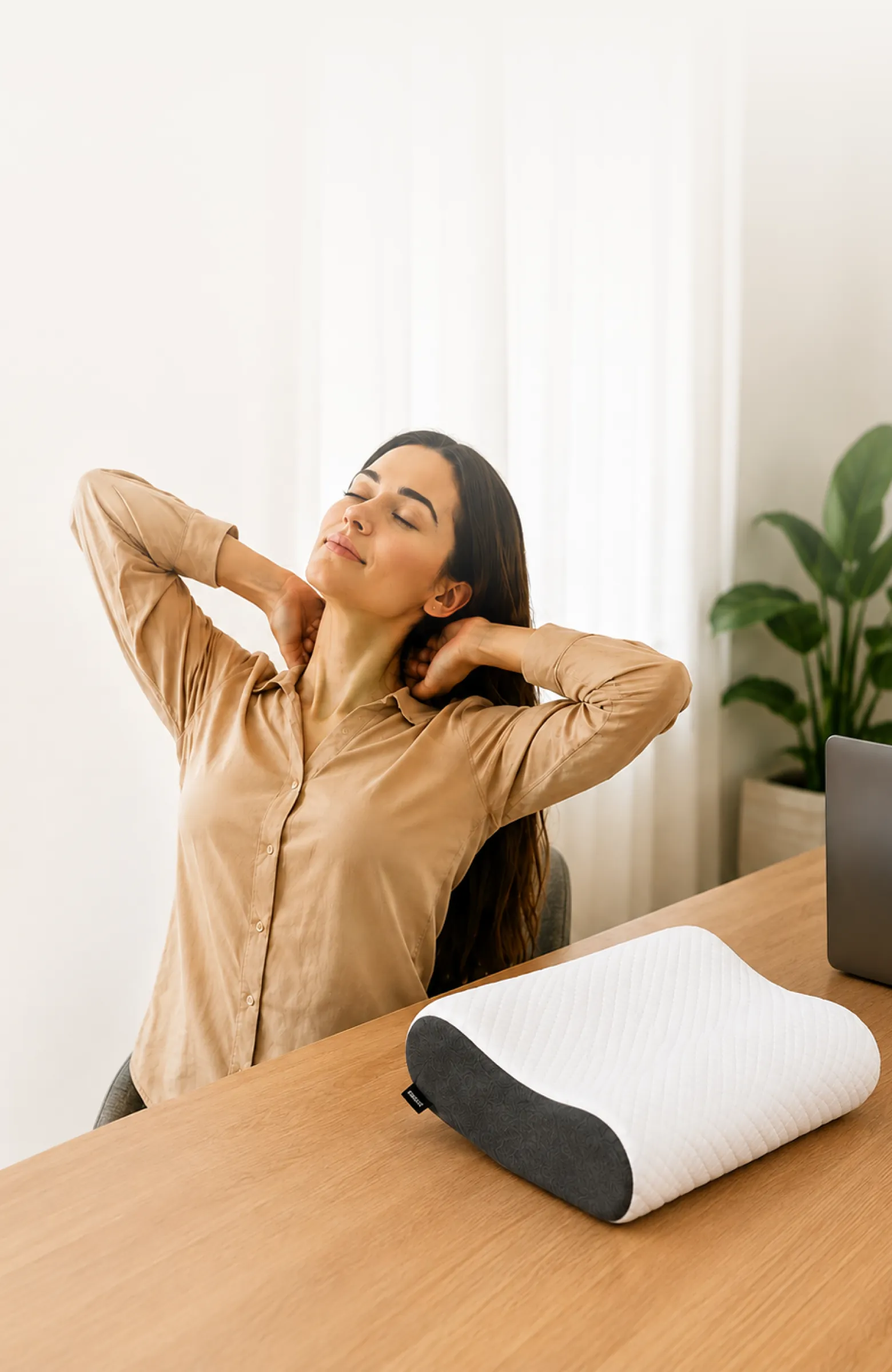
Neck Pain Relief & Better Sleep Guide
Expert tips, guides & sleep wellness advice to help you wake up refreshed every day.
Neck Pain Relief & Better Sleep Guide
Expert tips, guides & sleep wellness advice to help you wake up refreshed every day.

Text Neck Syndrome: Causes, Symptoms and How to Fix It
Every time you tilt your head down to check your phone, you're adding extra load to your neck. Do it for hours a day, and that habit has a name: text neck. It sounds minor until you look at the numbers behind it.
What Is Text Neck, Exactly?
Text neck describes the strain that builds up in your cervical spine from repeatedly looking down at a phone or laptop. At a neutral angle, your head weighs around 10-12 pounds. Tilt it forward 45-60 degrees — the typical texting angle — and the effective load on your neck can multiply several times over.
Why it matters
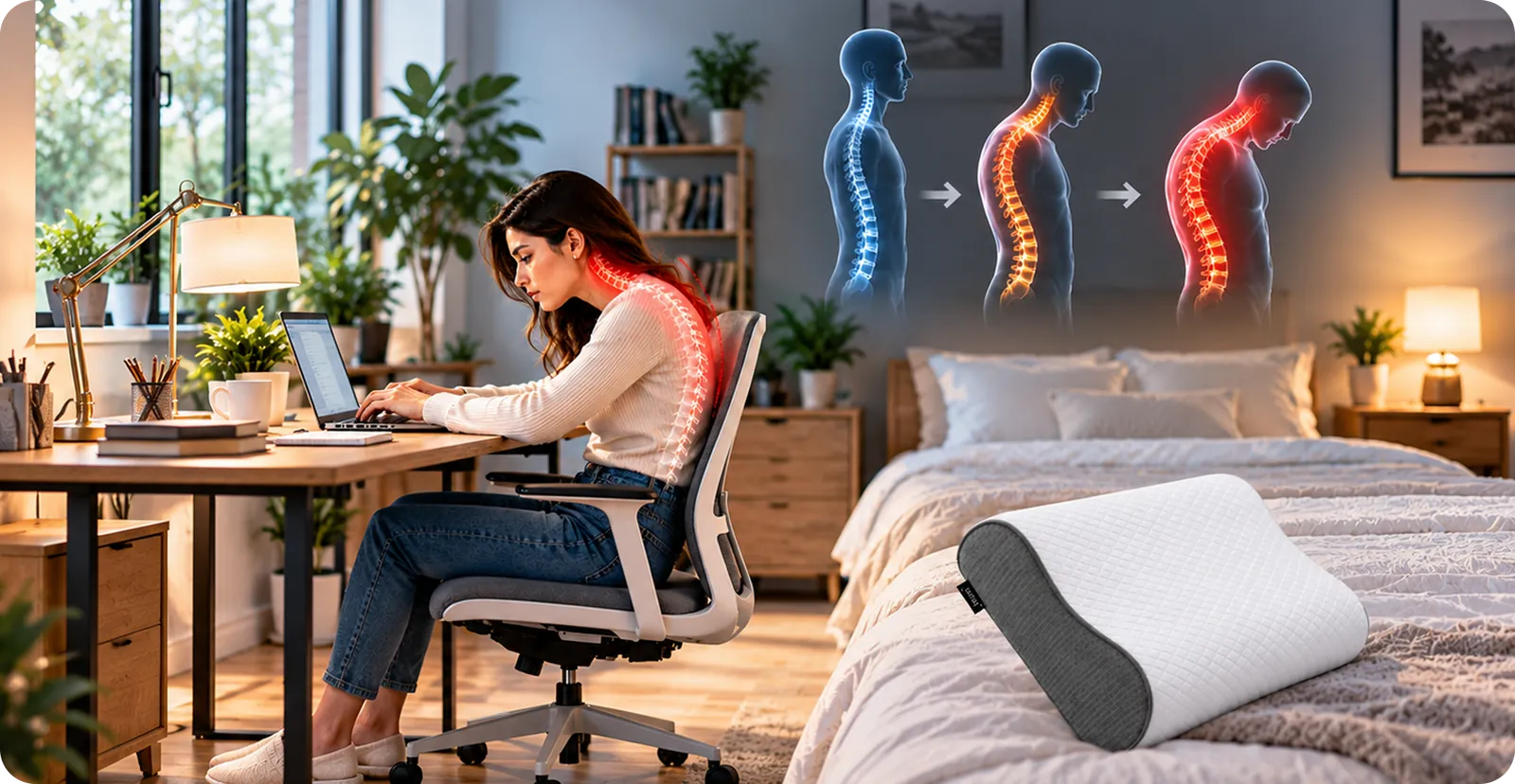
This isn't a one-time strain — it's cumulative. Hours of daily phone use, repeated over months, gradually pulls your neck out of its natural curve and can lead to chronic stiffness, headaches and reduced mobility.
The posture itself feels harmless in the moment, which is exactly why it's easy to ignore until symptoms show up.
Common Symptoms to Watch For
Text neck symptoms often creep in gradually, which makes them easy to dismiss as 'just being tired.' Recognizing the pattern early makes it much easier to reverse.
Signs you may have text neck
- Persistent upper back tension: A dull ache between the shoulder blades that worsens by evening.
- Tension headaches: Pain starting at the base of the skull and spreading forward.
- Reduced neck mobility: Difficulty turning your head fully to either side.
- Rounded shoulder posture: Shoulders that curl forward even when you try to stand tall.
If more than one of these sounds familiar, your daily phone habits are worth a closer look.
How to Correct and Prevent It
The fix isn't giving up your phone — it's changing the angle and duration of use, and giving your neck support to recover overnight.
Practical adjustments
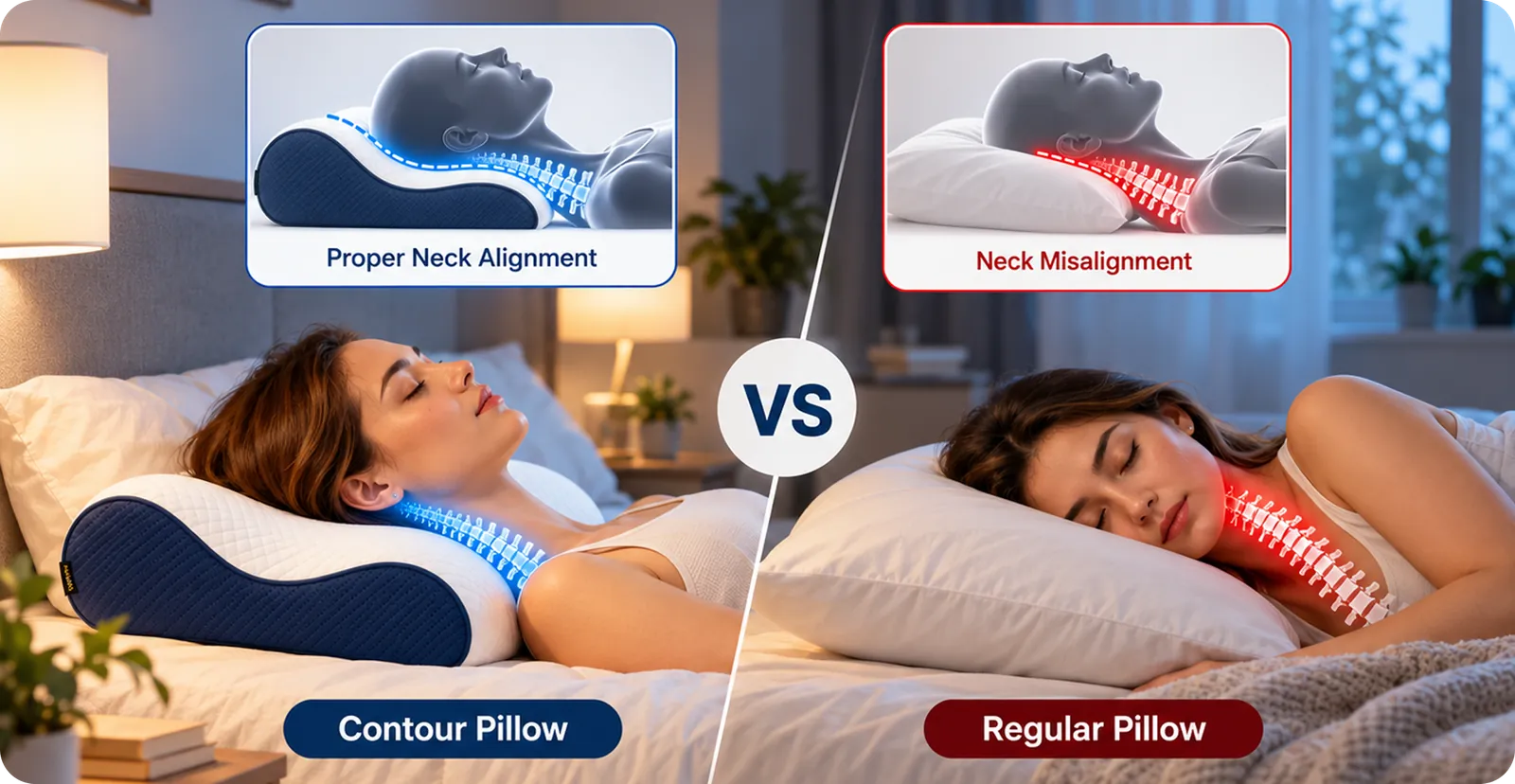
Bring your phone up closer to eye level instead of dropping your chin. Take a 30-second posture break every 20-30 minutes of screen time. And since text neck strain accumulates all day, make sure your pillow restores your neck's natural curve at night rather than letting it flatten further while you sleep.
Small, consistent adjustments during the day paired with proper support at night is what actually reverses the pattern.
Text Neck in Numbers
The strain scales dramatically with angle. Research on cervical spine loading shows that tilting the head forward by just 15 degrees roughly doubles the effective weight your neck muscles support, and by 60 degrees — a common texting angle — that load can reach five times the head's resting weight.
Why the numbers matter
It's easy to underestimate a habit that feels effortless in the moment. Seeing the load in concrete terms makes it clear why an hour of scrolling with your chin dropped can leave your neck more fatigued than an hour of many physical chores.
Awareness of the actual mechanical load is often what motivates people to finally change the habit.
Text Neck and Related Conditions
Text neck rarely exists in isolation — it often overlaps with or contributes to other posture-related issues that share the same root cause of prolonged forward head positioning.
Conditions it often accompanies
- Tech neck: A broader term covering strain from any downward-tilted device use, not just texting.
- Upper crossed syndrome: A pattern of tight chest and neck muscles paired with weak upper back muscles.
- Cervicogenic headaches: Headaches originating from neck tension rather than the head itself.
- Thoracic outlet tightness: Compression around the shoulder and collarbone from rounded posture.
Recognizing these overlaps helps explain why addressing text neck often improves several related symptoms at once, not just neck stiffness alone.
Don't Wait for the Pain to Get Worse
Text neck is one of the most common — and most preventable — causes of chronic neck pain today. The earlier you address the posture habit and give your neck proper nightly support, the easier it is to avoid long-term stiffness and pain. The habit is universal, which means the fix has to be sustainable rather than a one-time effort. Small, repeatable adjustments — to both your daytime posture and your nightly support — do more over months than any single dramatic change. At night, a cervical memory foam pillow keeps your neck supported while it recovers from the day's screen time.
Your neck carries the weight of every glance down at a screen — give it the support to recover each night.
Search Blogs
Categories


Stay Updated With Sleep Tips & Offers
Join our newsletter and get expert sleep tips, new product updates & exclusive offers.
No spam, ever. Unsubscribe anytime.

Related Blogs
Keep reading for more tips on better sleep, posture and neck comfort.
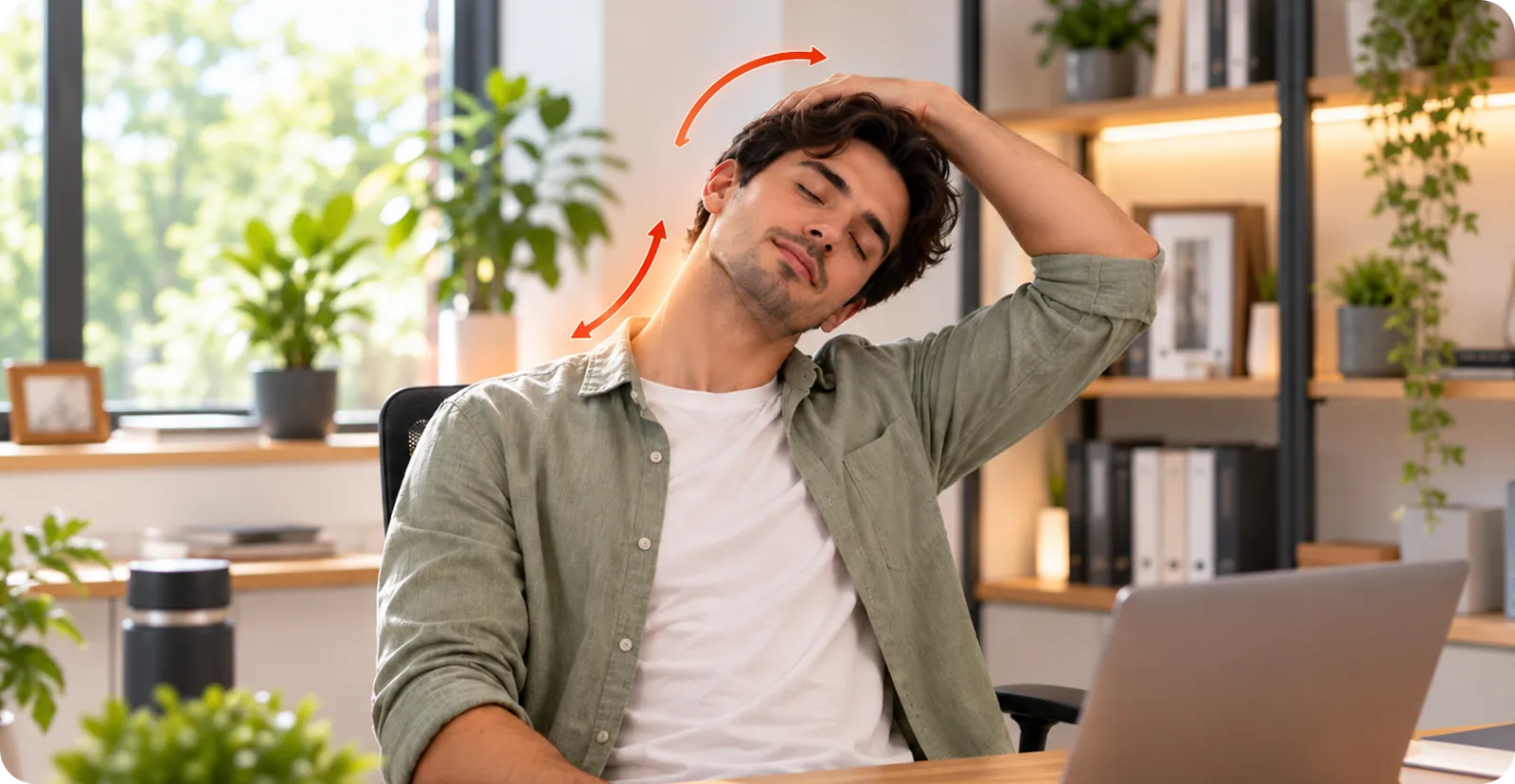
Simple Neck Stretches You Can Do at Your Desk in 5 Minutes
Beat desk-bound neck stiffness with these simple, effective neck stretches you can do right at your workstation in just 5 minutes a day.

Why Your Neck Pain Gets Worse in the Morning (And How to Stop It)
Waking up with a stiffer, more painful neck than when you fell asleep? Here's why morning neck pain happens and how to stop it from recurring.

Neck Pain vs Shoulder Pain: How to Tell the Difference and Treat Each
Neck and shoulder pain often overlap but need different care. Learn how to tell them apart, what causes each, and the best way to treat both.
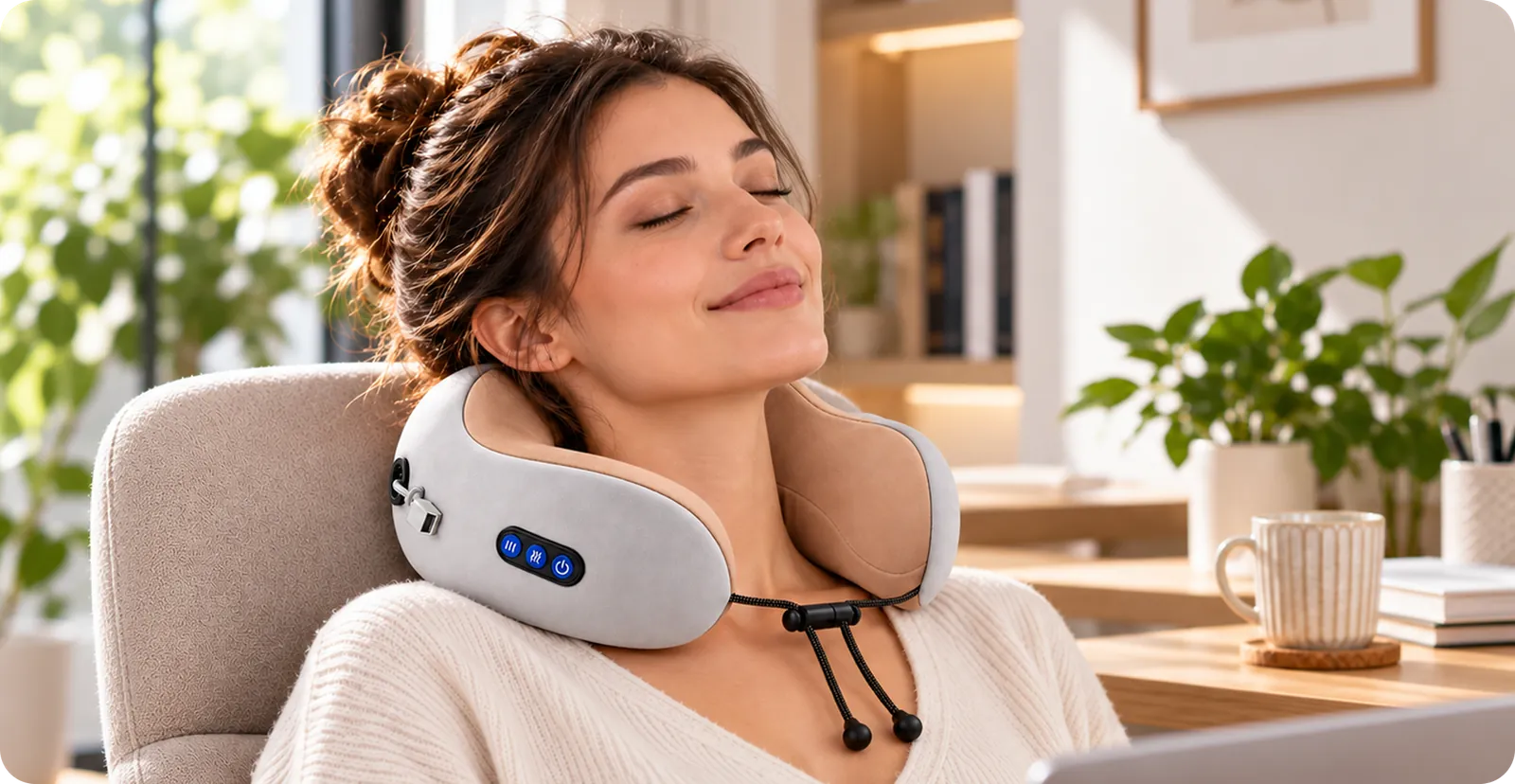
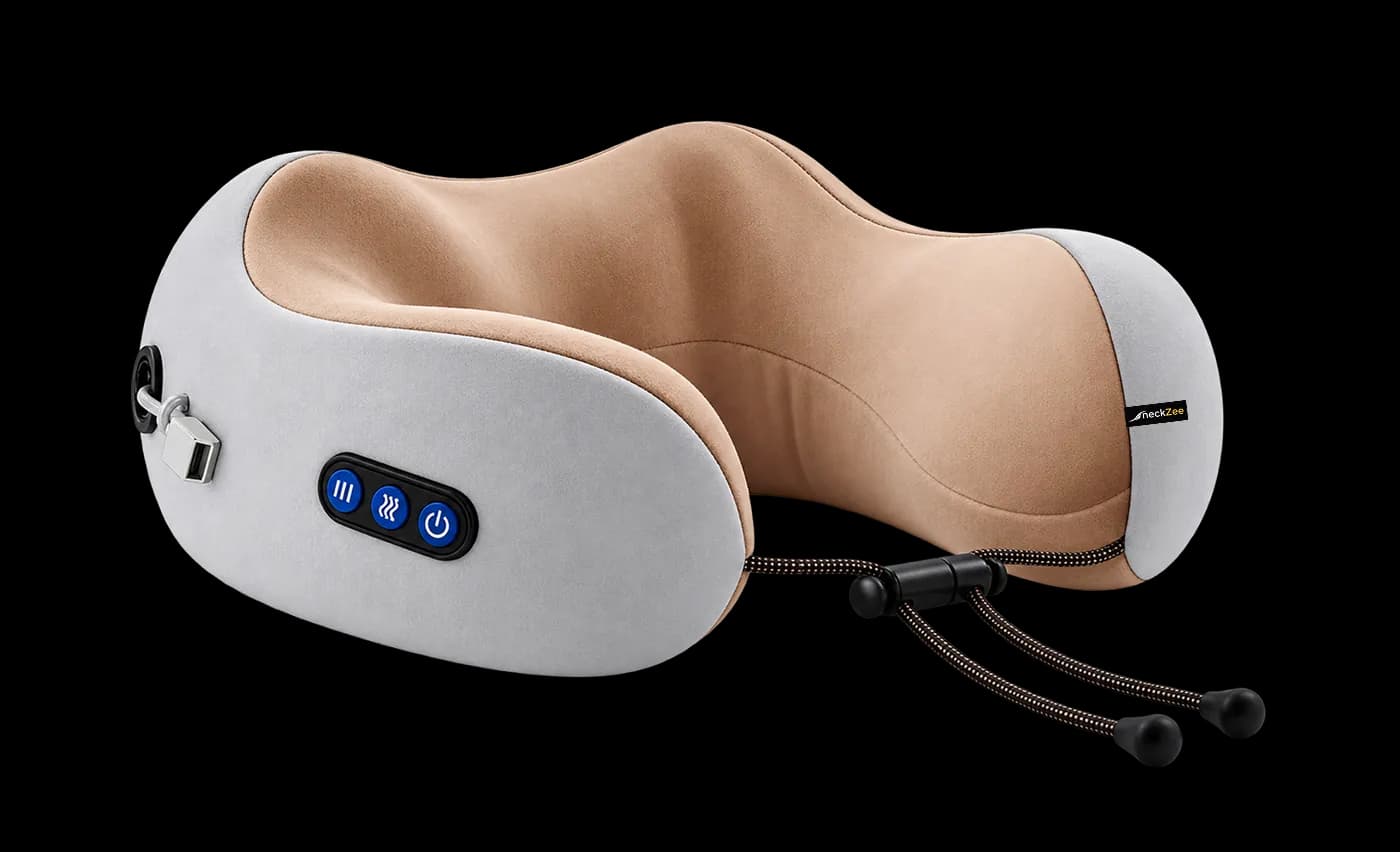
How an Electric Neck Massager Helps Relieve Chronic Tension
Chronic neck tension needs more than rest. Discover how an electric neck massager works, who it helps most, and how it eases daily muscle tightness.
Frequently Asked Questions
See what our customers have to say.
Wake Up With Better Neck Support
Premium memory foam bed pillow designed for comfortable, everyday neck support and restful sleep.
Explore Bed Pillow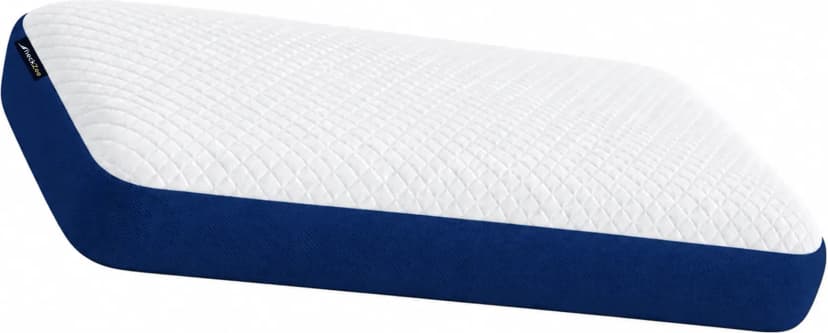

Free Shipping
Pan India

7 Days
Money Back

Secure Payment
UPI & Cards

Designed for
Better Sleep