

Neck Pain Relief & Better Sleep Guide
Expert tips, guides & sleep wellness advice to help you wake up refreshed every day.
Neck Pain Relief & Better Sleep Guide
Expert tips, guides & sleep wellness advice to help you wake up refreshed every day.
REM vs Deep Sleep: Understanding Your Sleep Cycles
Not all sleep does the same job. REM and deep sleep serve very different purposes, and understanding the difference explains a lot about why some nights leave you more refreshed than others. You can also get a rough sense of your own cycle quality without any special equipment.
The Basics of a Sleep Cycle
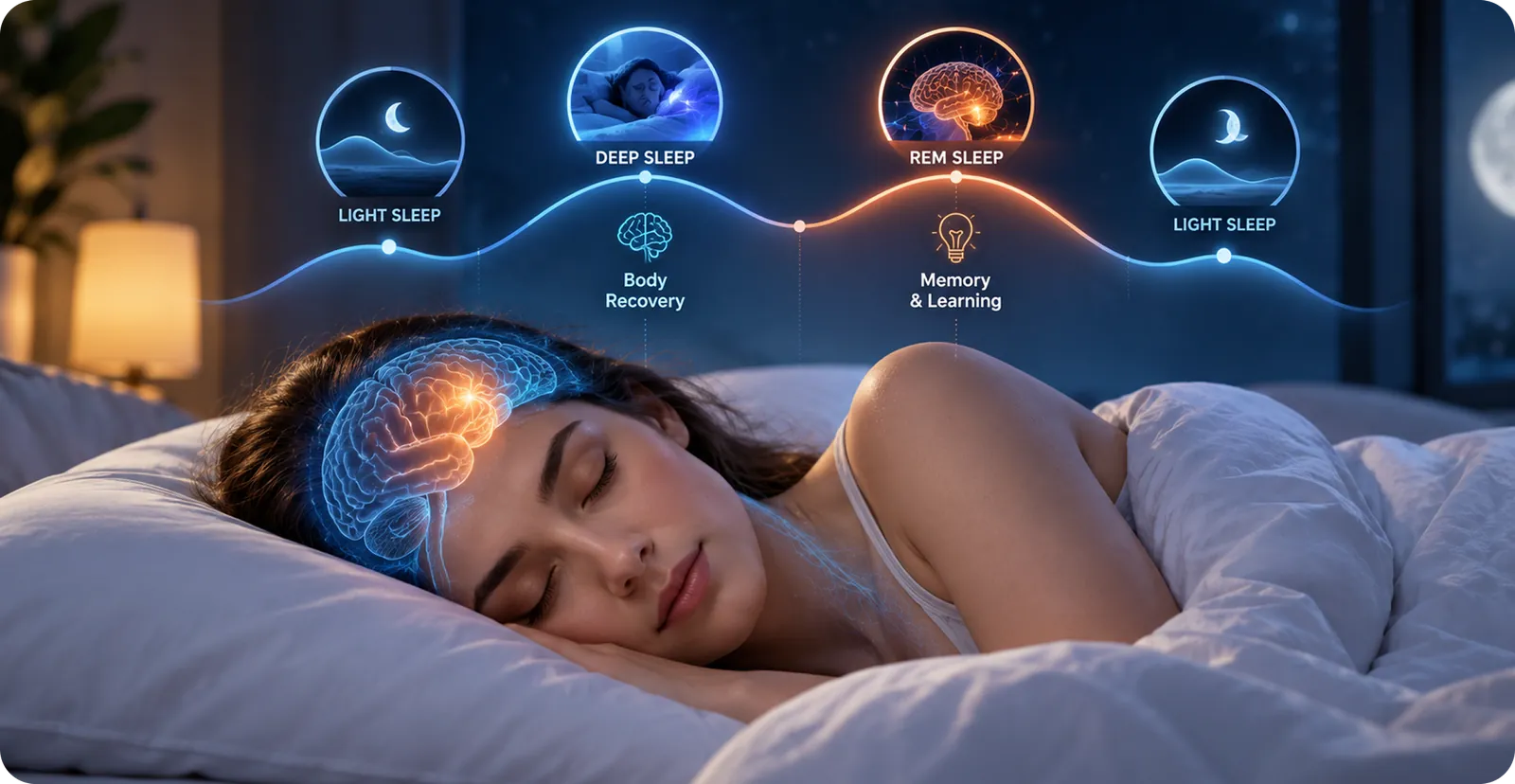
Each night, your body moves through repeating 90-minute cycles that progress through light sleep, deep sleep and REM sleep. Early cycles favor more deep sleep, while later cycles in the night shift toward longer REM periods.
Why it matters
Because deep sleep is concentrated earlier in the night, cutting sleep short — even by an hour — disproportionately reduces deep sleep rather than evenly trimming all stages equally.
This is part of why a shortened night can leave you feeling physically unrecovered even if you don't feel obviously sleep-deprived.
What Each Stage Actually Does
Deep sleep and REM sleep handle distinctly different types of recovery, and both are necessary for feeling fully rested.
Stage-by-stage roles
- Deep sleep: Handles physical repair — tissue growth, muscle recovery and immune function.
- REM sleep: Supports memory consolidation, learning and emotional processing.
- Light sleep: Transitional stage that still contributes to overall rest, though less intensively.
- Cycle repetition: A full night typically includes 4-6 complete cycles.
Missing out on either deep or REM sleep affects a different, but equally important, part of how you feel and function the next day.
What Disrupts These Cycles
Sleep cycles are sensitive to interruption — anything that causes you to stir, even briefly, can pull you out of deep or REM stages before they've finished their work.
Common disruptors
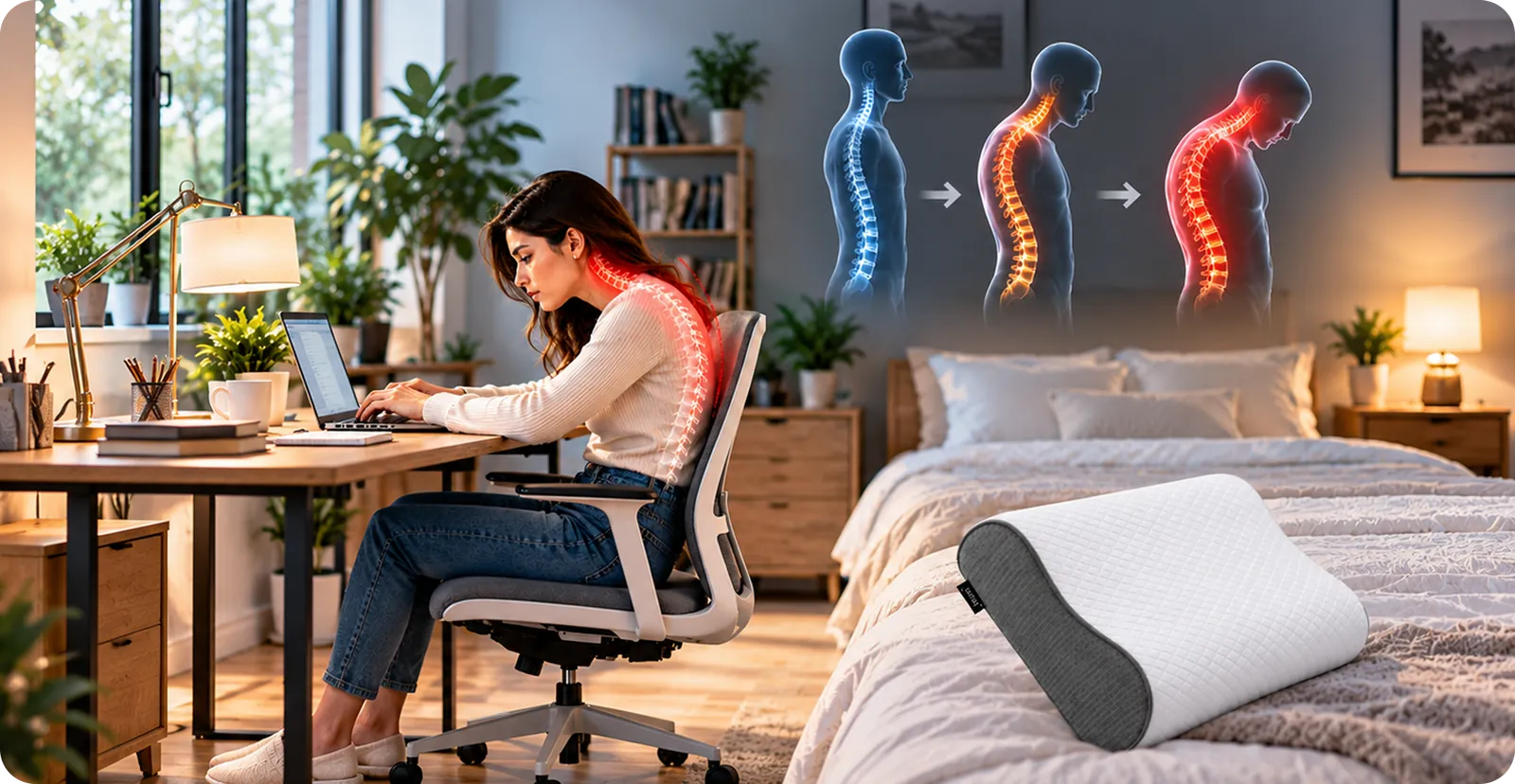
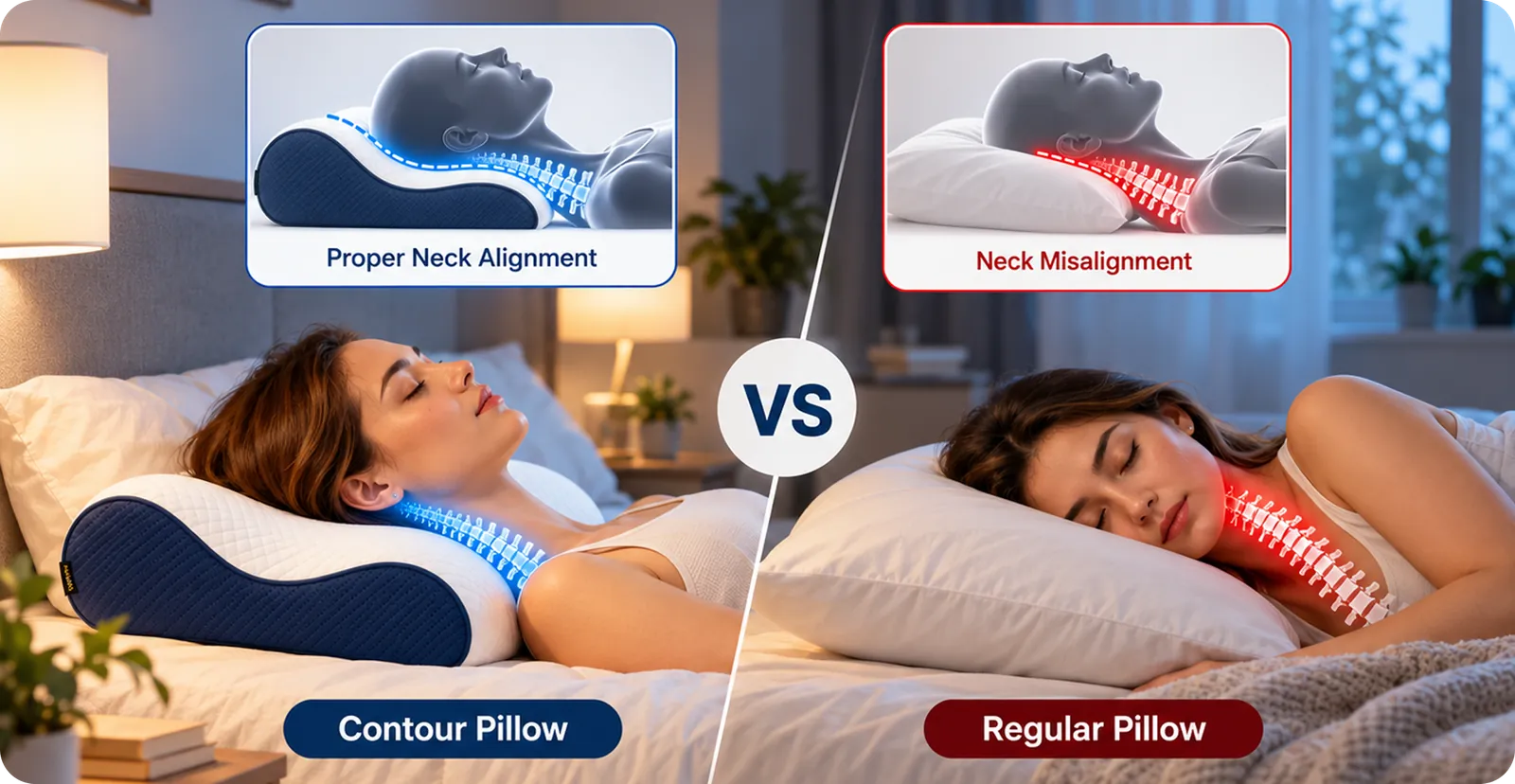
Physical discomfort from poor neck or spine support is one of the most common and overlooked disruptors, since it doesn't always fully wake you but still shifts you out of deeper sleep stages. Noise, light, temperature swings and alcohol close to bedtime also interfere with cycle completion.
Reducing these disruptions allows your body to complete more full cycles, rather than getting stuck in lighter, less restorative sleep.
How to Track Your Own Sleep Cycles
You don't need a sleep lab to get a general sense of how your cycles are going — a few accessible tools and habits can offer useful insight.
Ways to check
- Wearable sleep trackers: Estimate sleep stages using movement and heart rate data.
- Consistent wake-up feel: A reliable, low-effort signal of overall sleep quality over time.
- Sleep journaling: Tracking bedtime, wake time and how rested you feel reveals patterns.
- Noting disruptions: Recording what wakes you helps identify recurring causes.
None of these are as precise as a clinical sleep study, but consistently tracking trends over a few weeks can reveal a lot about your actual sleep quality.
Why Naps Don't Replace Nighttime Cycles
Daytime naps can offer a real energy boost, but they don't replicate the full cycle structure your body relies on during nighttime sleep.
What naps can and can't do
A short nap can restore some alertness and light-sleep benefits, but naps are rarely long enough to reach the deep, slow-wave sleep concentrated in early nighttime cycles, and even less likely to include meaningful REM sleep. This is why an afternoon nap, however refreshing, doesn't fully make up for a short or fragmented night.
Naps are a useful supplement to poor sleep, not a substitute for it — protecting your main nighttime sleep window still matters most. If you're relying on naps to compensate for consistently short nights, that's usually a sign it's time to address the nighttime sleep itself rather than the workaround. Tracking how you feel across a full week, rather than judging any single night in isolation, gives a more accurate picture of whether your sleep cycles are actually improving.
Better Cycles, Not Just More Hours
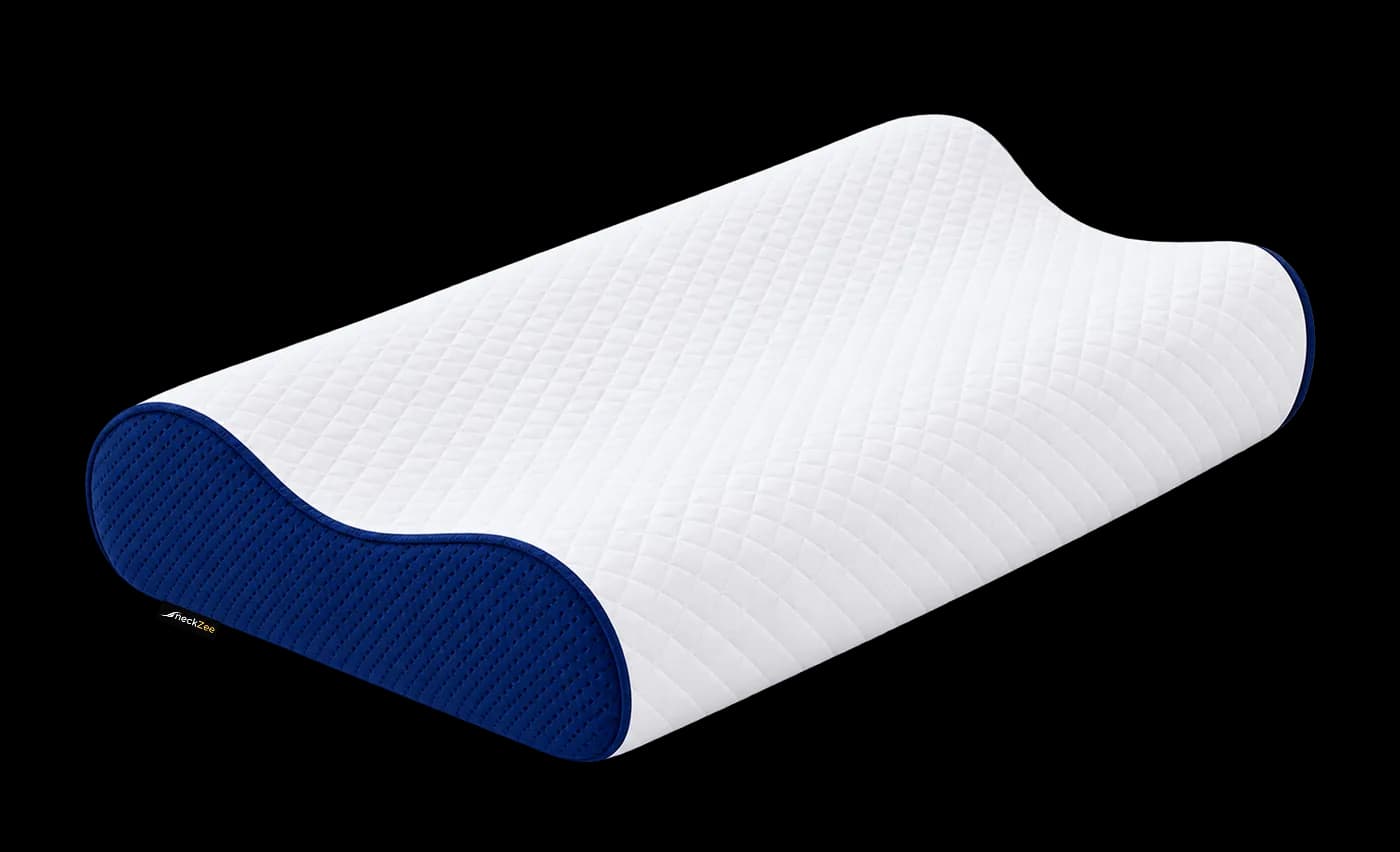
Understanding REM and deep sleep makes it clear why sleep quality matters as much as sleep quantity. Protecting your sleep environment — including proper neck support that prevents discomfort-driven waking — helps your body complete more full, uninterrupted cycles each night. Whether or not you formally track it, the goal stays the same: fewer disruptions mean more completed cycles, and more completed cycles mean feeling genuinely rested. A comfortable memory foam bed pillow for sleeping makes it easier to stay asleep long enough to complete each cycle.
Your body needs complete cycles, not just hours in bed, to feel truly recovered.
Search Blogs
Categories
Stay Updated With Sleep Tips & Offers
Join our newsletter and get expert sleep tips, new product updates & exclusive offers.
No spam, ever. Unsubscribe anytime.

Related Blogs
Keep reading for more tips on better sleep, posture and neck comfort.
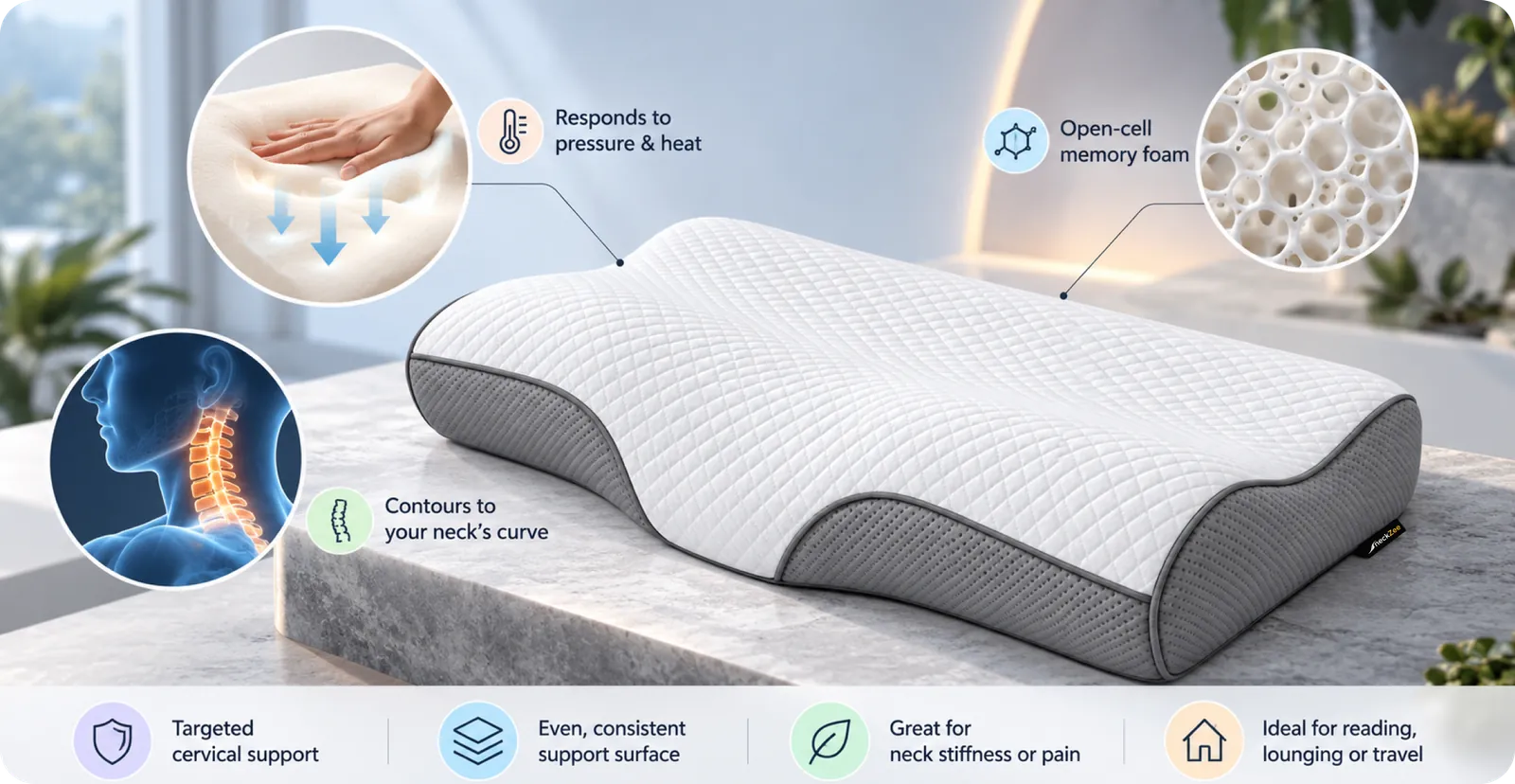
The Science Behind Memory Foam: Why It Contours to Your Body
Ever wonder how memory foam molds to your body? Explore the science behind memory foam's pressure-responsive design and why it supports better sleep.
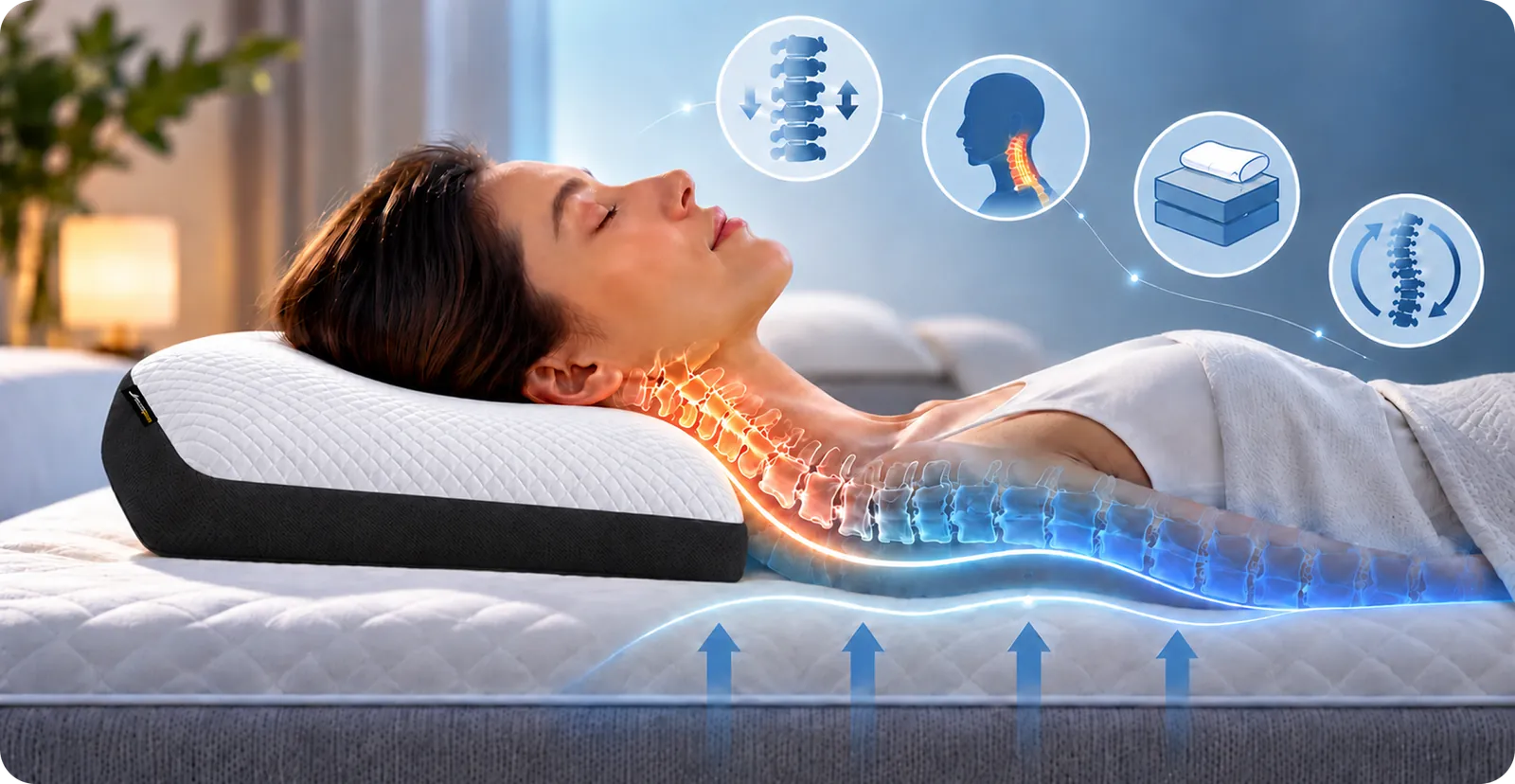
What Happens to Your Spine While You Sleep
Your spine is hard at work even while you rest. Learn what happens to your spine overnight, why alignment matters, and how to support it while sleeping.
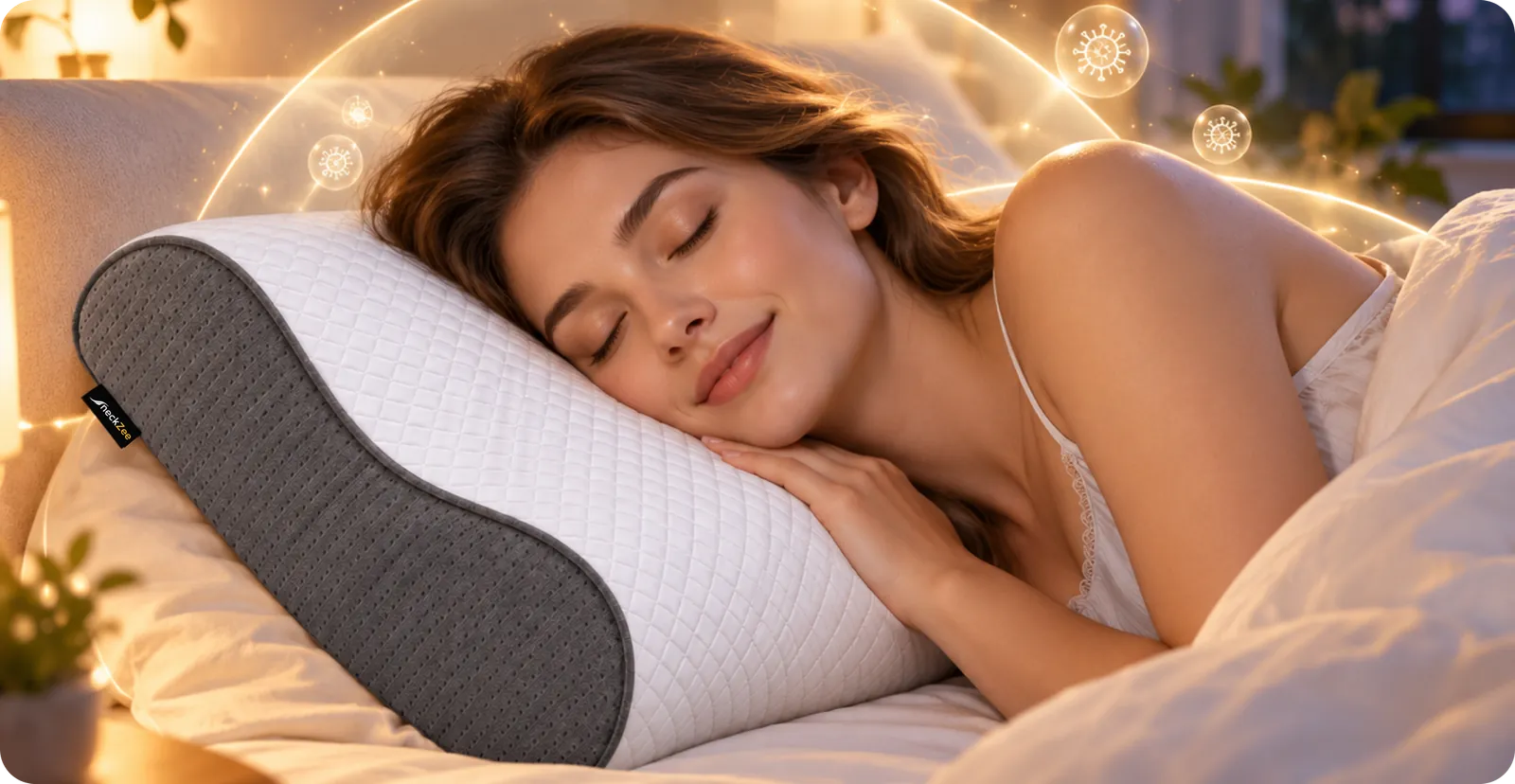
How Sleep Quality Affects Your Immune System and Daily Energy
Poor sleep does more than tire you out — it weakens immunity and drains daily energy. Learn how sleep quality impacts your health and how to improve it.
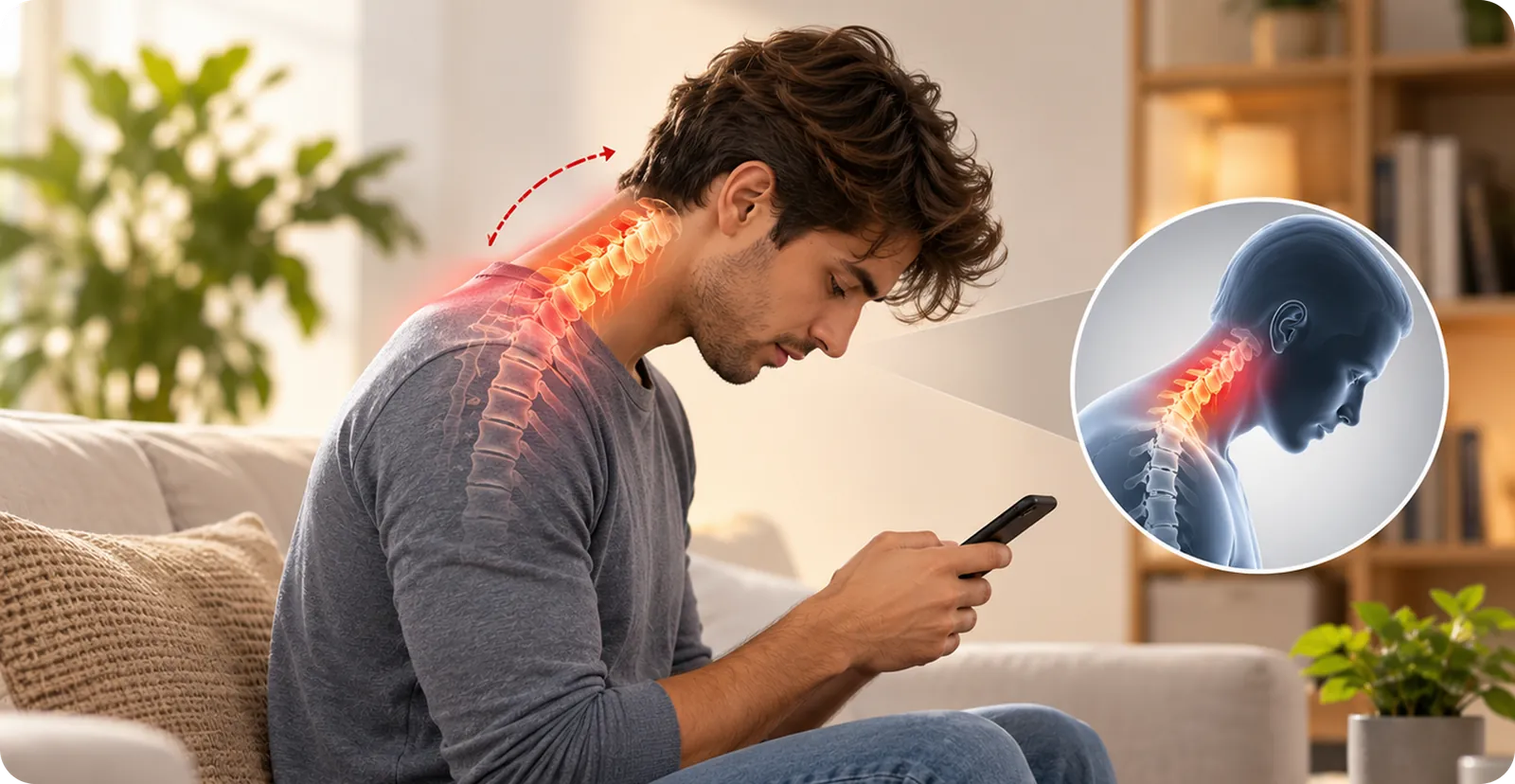
Text Neck Syndrome: Causes, Symptoms and How to Fix It
Constant phone use can cause 'text neck.' Learn the symptoms of text neck syndrome, what causes it, and practical ways to relieve and prevent it.
Frequently Asked Questions
See what our customers have to say.
Wake Up With Better Neck Support
Premium memory foam bed pillow designed for comfortable, everyday neck support and restful sleep.
Explore Bed Pillow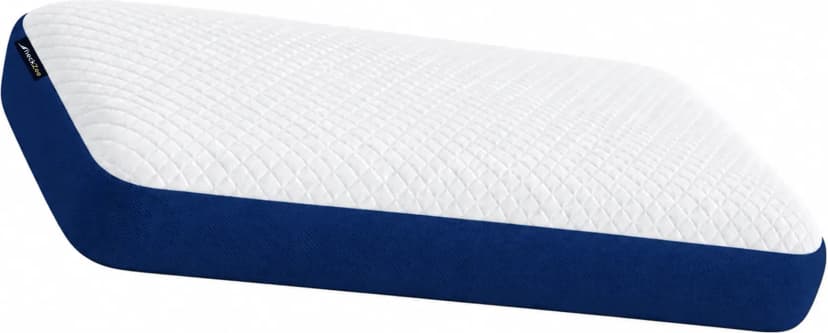

Free Shipping
Pan India

7 Days
Money Back

Secure Payment
UPI & Cards

Designed for
Better Sleep