

Neck Pain Relief & Better Sleep Guide
Expert tips, guides & sleep wellness advice to help you wake up refreshed every day.
Neck Pain Relief & Better Sleep Guide
Expert tips, guides & sleep wellness advice to help you wake up refreshed every day.
The Science Behind Memory Foam: Why It Contours to Your Body
Memory foam feels almost too good to be true — it seems to know exactly where your body needs support. The reason comes down to simple material science. A little more chemistry knowledge goes a long way toward choosing a pillow that actually performs.
The Chemistry of a Slow-Responding Foam
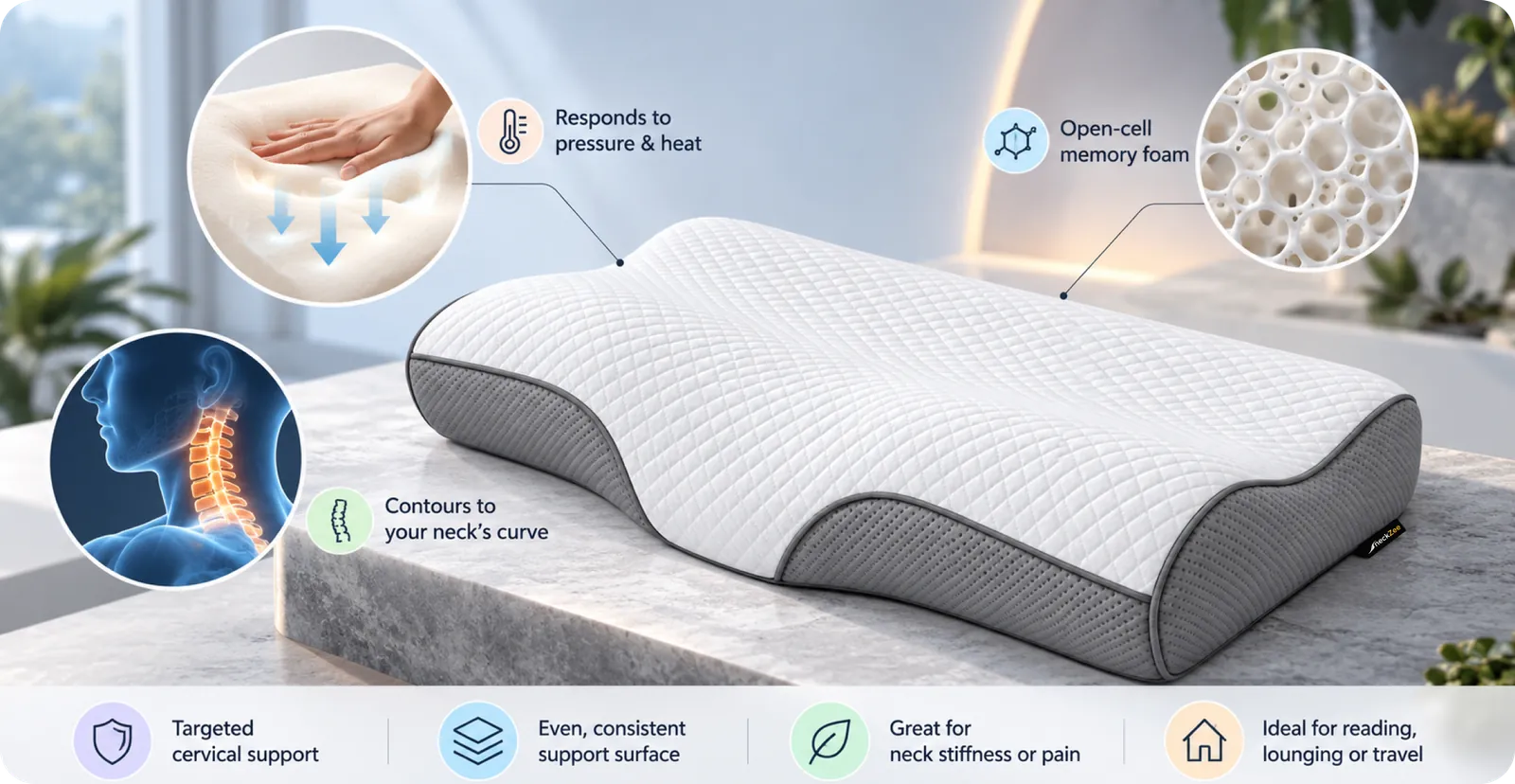
Memory foam is a type of polyurethane foam engineered with open cells that respond to both pressure and body heat. Unlike traditional foam, which springs back instantly, memory foam is 'viscoelastic' — it slowly softens where your body applies weight and warmth, then gradually returns to its original shape once that pressure is removed.
Why it matters
This slow, pressure-responsive behavior is what allows memory foam to mold precisely to the curves of your neck and head instead of pushing back against them, distributing weight more evenly than firmer materials.
It's not magic — it's a material designed specifically to trade instant rebound for precise, personalized support.
What Density Tells You About Support
Not all memory foam performs the same way. Density — measured in pounds per cubic foot — determines how supportive and durable the foam actually is.
How density affects feel
- Low density (under 3 lb): Softer feel but compresses and loses shape faster.
- Medium density (3-5 lb): Balanced support and durability for most sleepers.
- High density (5 lb+): Firmer, more durable support that holds contouring longer.
- Temperature sensitivity: Higher-quality foams respond consistently across a range of room temperatures.
Higher density generally means the foam holds its supportive shape for longer, rather than flattening out after a few months of use.
Why This Matters for Neck Support Specifically
The neck is one of the hardest areas of the body to support well, because it needs to stay both cushioned and precisely aligned at the same time.
The practical benefit
Because memory foam contours around the exact curve of your neck rather than forcing your neck to conform to a fixed shape, it can maintain cervical alignment through the night even as you shift positions — something flatter, less responsive fill materials struggle to do consistently.
This is why memory foam has become the default material for cervical and orthopedic pillow design.
Common Misconceptions About Memory Foam
Because memory foam is so widely used, a few myths about how it works have become common — and understanding the reality helps you evaluate quality more accurately.
Myths worth clearing up
- Softer isn't always better: Softness and support are different properties; a soft foam can still lack structure.
- All memory foam sleeps hot: Open-cell and gel-infused variants address heat retention directly.
- Price doesn't guarantee density: Density should be checked directly, not assumed from cost alone.
- Quality foam holds up over time: Higher-density foam typically holds its supportive properties for years, not months.
Knowing what the material actually does — rather than relying on marketing shorthand — makes it much easier to judge real quality.
How to Judge Quality Without Lab Equipment
You don't need to test density in a lab to get a reasonable sense of a memory foam pillow's quality before buying.
Simple at-home checks
Press into the foam with your palm — quality memory foam should slowly rebound over several seconds rather than springing back instantly or staying permanently indented. It should also feel noticeably firmer in a cool room and slightly softer after a few minutes of body heat, a sign the viscoelastic response is working as intended.
These simple checks won't replace a spec sheet, but they're a practical way to gauge real quality while shopping.
The Science Supports the Comfort
Memory foam's contouring isn't just a marketing description — it's a direct result of its viscoelastic chemistry and density engineering. Understanding what's actually happening inside the material makes it easier to evaluate pillow quality beyond how soft something feels in a showroom. The next time you're comparing pillows, look past marketing language for concrete details like density and cell structure — they tell you far more about real-world performance than how a pillow feels for the first ten seconds in a store. A pillow built on genuine material science, rather than marketing alone, is one that keeps performing the same way months or years after your first night with it. You can feel this response in a cervical memory foam pillow, which adapts to your head and neck as you settle in.
Great support isn't a coincidence — it's chemistry engineered to respond exactly where your body needs it.
Search Blogs
Categories
Stay Updated With Sleep Tips & Offers
Join our newsletter and get expert sleep tips, new product updates & exclusive offers.
No spam, ever. Unsubscribe anytime.

Related Blogs
Keep reading for more tips on better sleep, posture and neck comfort.
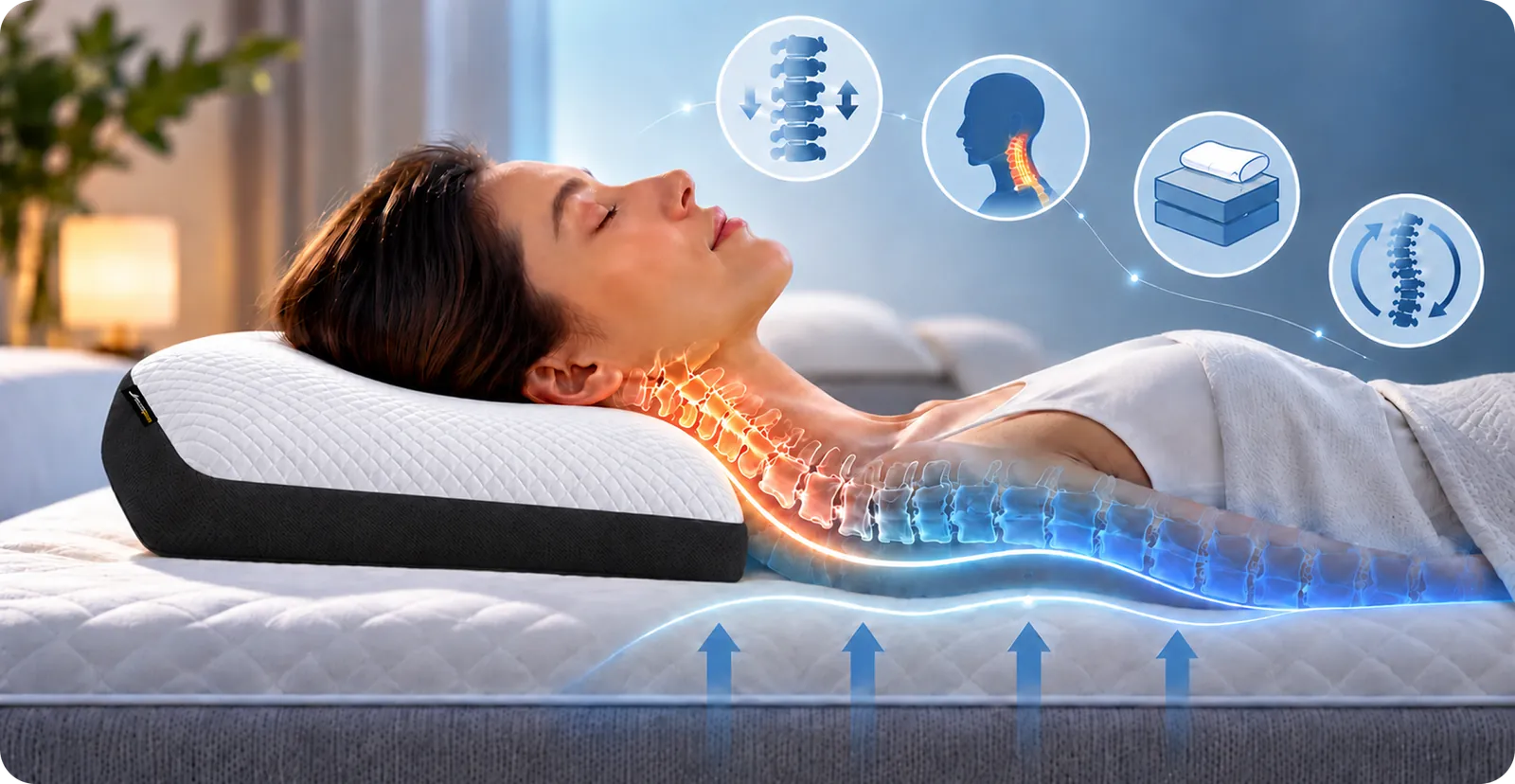
What Happens to Your Spine While You Sleep
Your spine is hard at work even while you rest. Learn what happens to your spine overnight, why alignment matters, and how to support it while sleeping.

REM vs Deep Sleep: Understanding Your Sleep Cycles
Not all sleep is equal. Learn the difference between REM and deep sleep, what each stage does for your body, and how to get more of both.
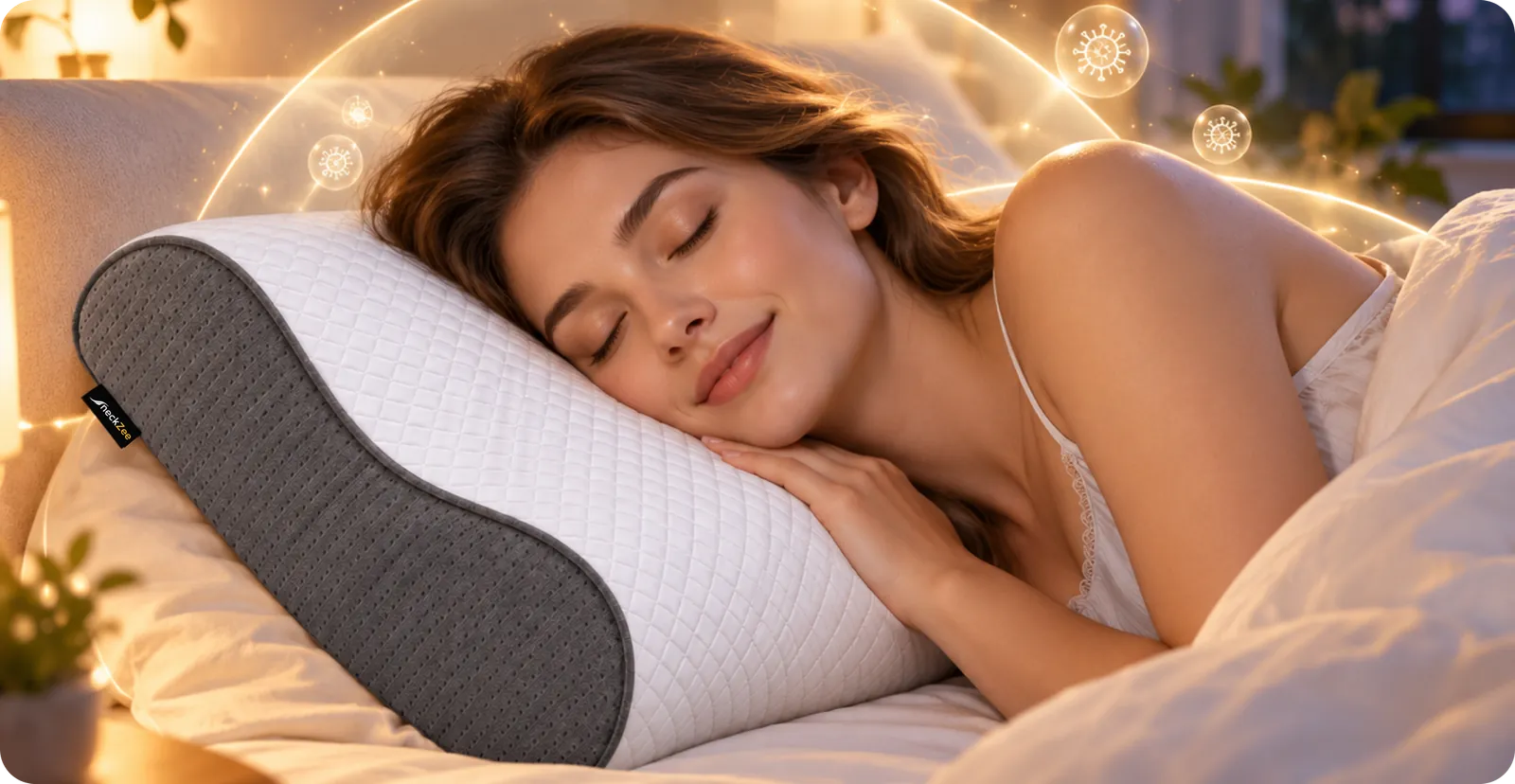
How Sleep Quality Affects Your Immune System and Daily Energy
Poor sleep does more than tire you out — it weakens immunity and drains daily energy. Learn how sleep quality impacts your health and how to improve it.
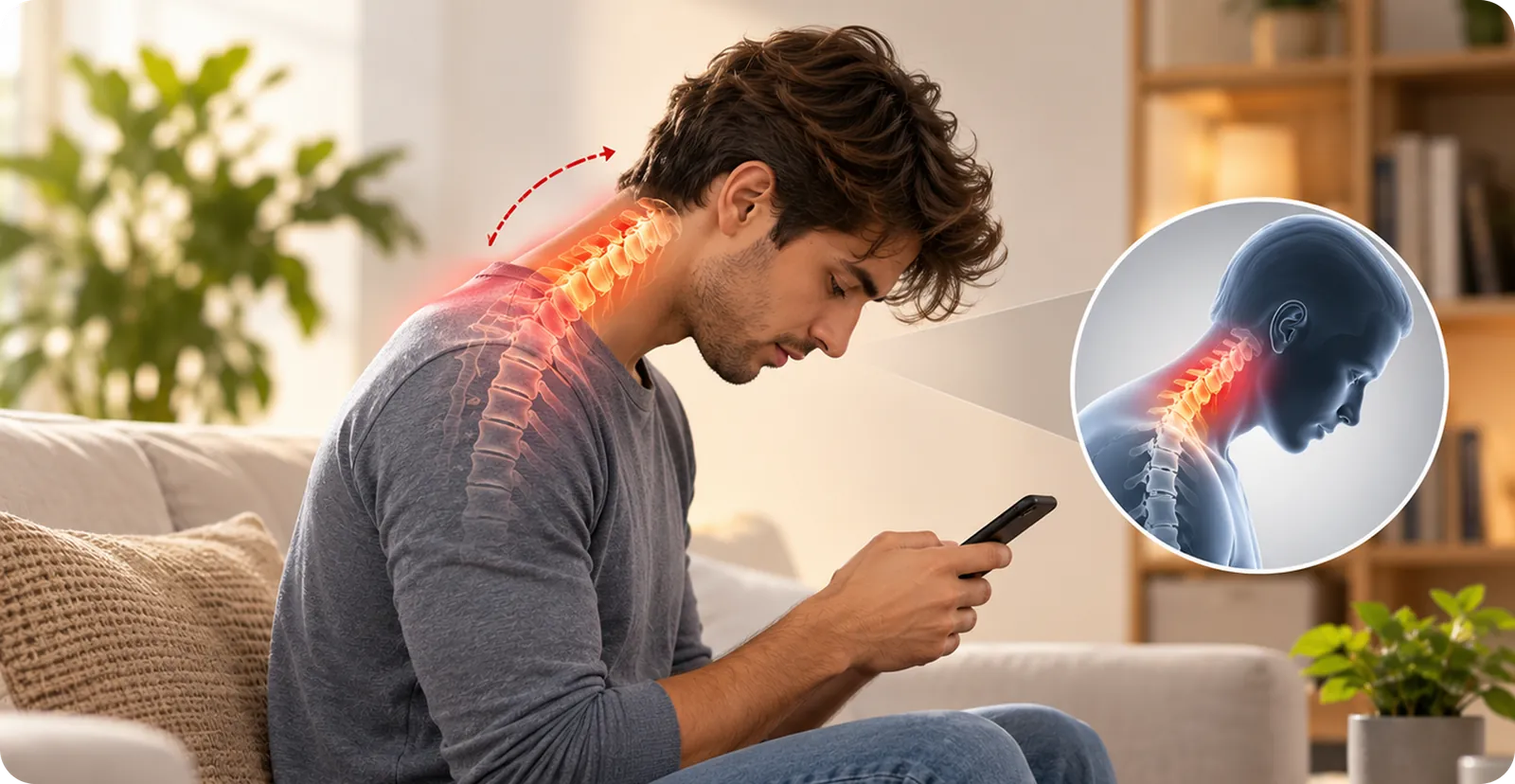
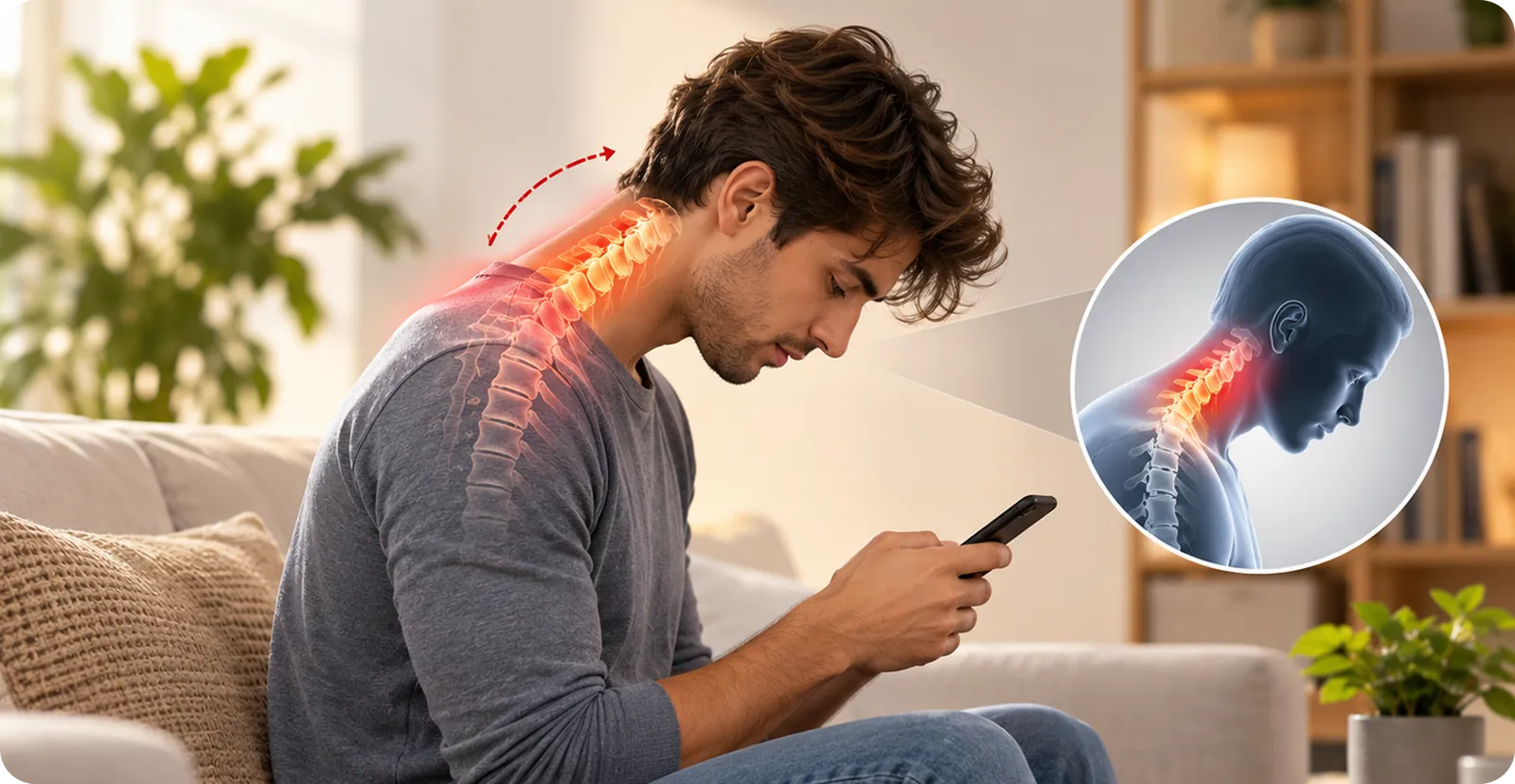
Text Neck Syndrome: Causes, Symptoms and How to Fix It
Constant phone use can cause 'text neck.' Learn the symptoms of text neck syndrome, what causes it, and practical ways to relieve and prevent it.
Frequently Asked Questions
See what our customers have to say.
Wake Up With Better Neck Support
Premium memory foam bed pillow designed for comfortable, everyday neck support and restful sleep.
Explore Bed Pillow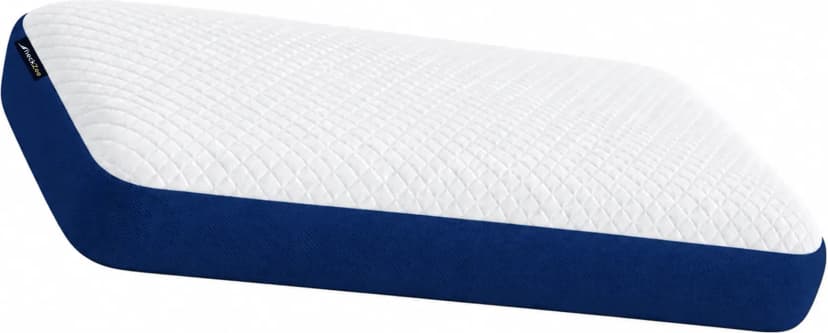

Free Shipping
Pan India

7 Days
Money Back

Secure Payment
UPI & Cards

Designed for
Better Sleep