

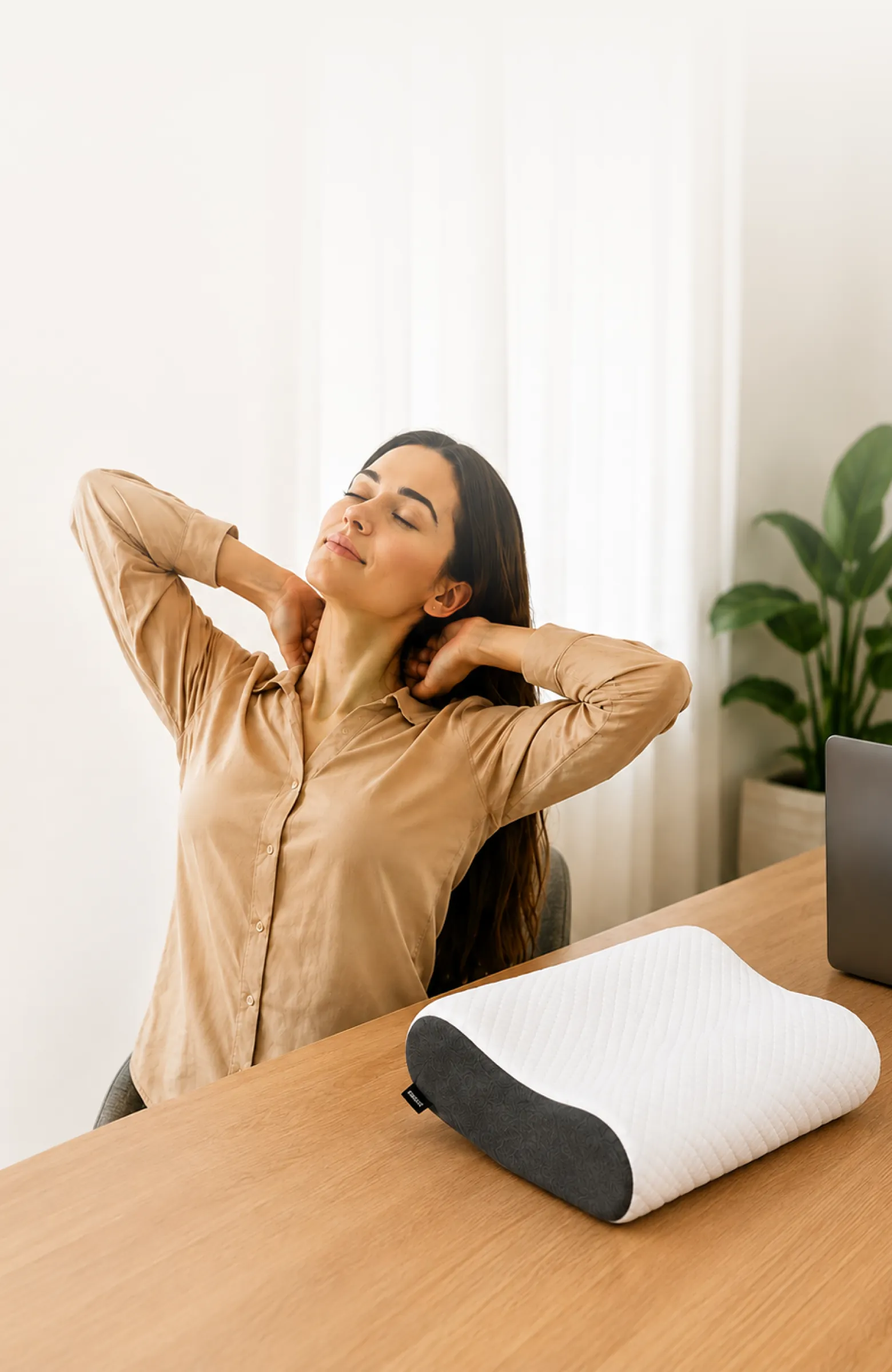
Neck Pain Relief & Better Sleep Guide
Expert tips, guides & sleep wellness advice to help you wake up refreshed every day.
Neck Pain Relief & Better Sleep Guide
Expert tips, guides & sleep wellness advice to help you wake up refreshed every day.

Spinal Decompression During Sleep
Throughout the day, gravity gradually compresses the discs between your vertebrae. Lying down at night relieves that pressure, allowing spinal discs to rehydrate and slightly expand — which is part of why people are measurably taller in the morning than by evening.
Why it matters
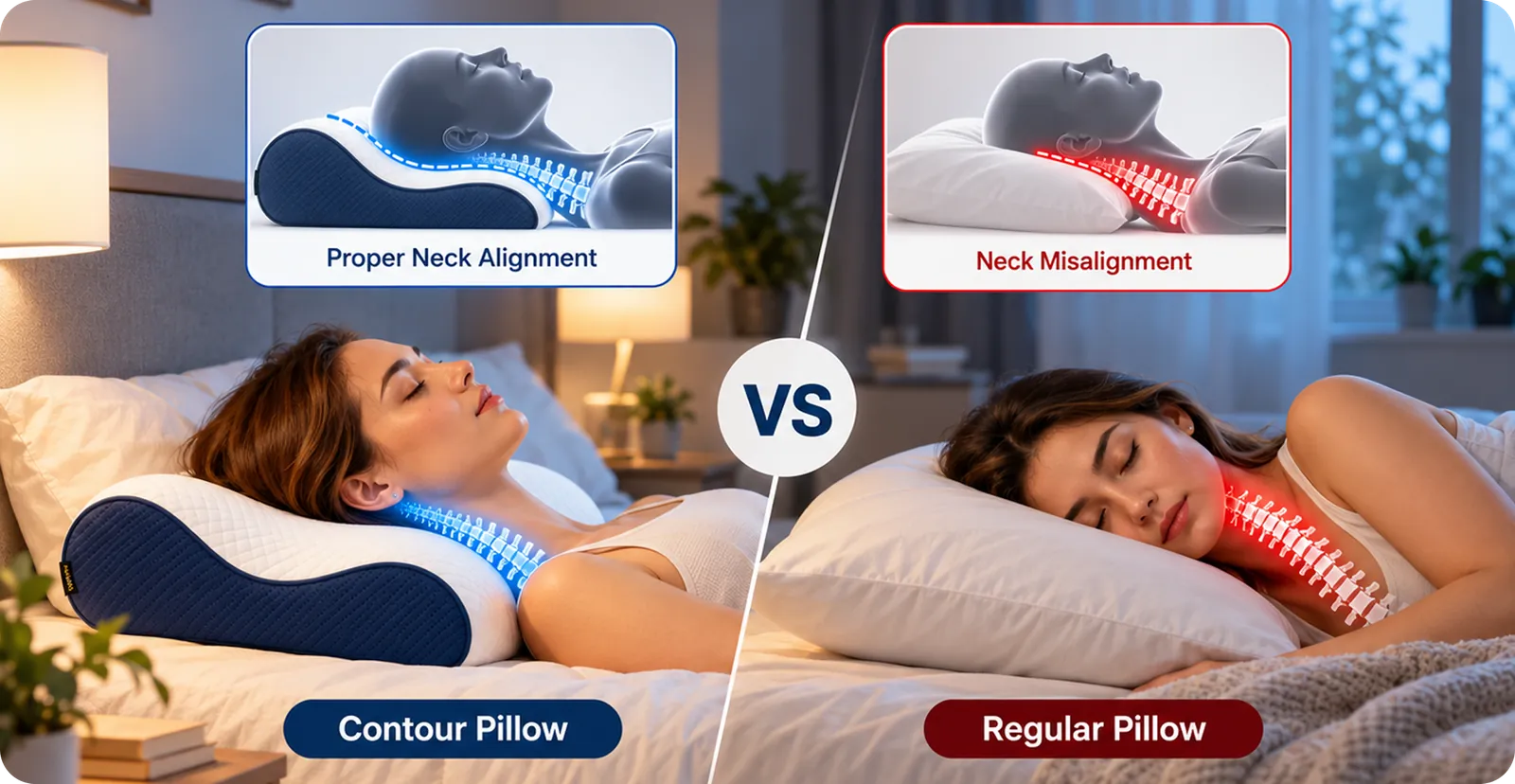
This nightly decompression is an important recovery process, but it only works properly if your spine is resting in a neutral, well-supported position. Poor alignment while lying down can interfere with even decompression across the spine.
Sleep isn't just rest for your mind — it's active recovery time for your spine.
How Sleep Position Affects Alignment
Different sleep positions place different demands on spinal alignment, and support needs to adjust accordingly.
Position-by-position support needs
- Back sleeping: Needs a pillow that fills the gap under the neck's curve without tilting the head forward.
- Side sleeping: Needs enough height to keep the spine level between shoulder and head.
- Stomach sleeping: Puts the most rotational strain on the neck regardless of pillow choice.
- Combination sleeping: Benefits most from a pillow shape that adapts across multiple positions.
Matching your pillow to your dominant sleep position gives your spine the best chance at proper overnight alignment.
Signs Your Spine Isn't Recovering Properly
When spinal alignment is off during sleep, the effects usually show up the next morning rather than during the night itself.
What to watch for
Morning stiffness, a neck that takes longer than usual to loosen up, or lower back tension that wasn't there the night before are all signs your spine may not be resting in proper alignment. These symptoms often point back to mattress or pillow support rather than anything more serious.
Persistent morning stiffness is worth investigating through your sleep setup before assuming it's simply age or activity level.
How Mattress and Pillow Work Together
Spinal alignment during sleep isn't determined by the pillow alone — the mattress underneath plays an equally important role in how your spine settles overnight.
Why both matter
A mattress that's too soft lets your hips sink out of line with your shoulders, while one that's too firm can create pressure points that cause shifting. The pillow's job is to fill the remaining gap at the neck — but it can only do that job properly if the mattress underneath is already keeping your spine level.
Think of the two as a system rather than separate purchases; upgrading one without considering the other only solves part of the alignment problem.
How Age Affects This Process
Spinal decompression and recovery during sleep aren't static across your lifetime — they shift gradually as discs and surrounding tissue change with age.
What changes over time
Younger spines tend to rehydrate and decompress more readily overnight, while natural disc dehydration with age can reduce how much nightly recovery occurs. This doesn't mean sleep support matters less as you age — if anything, proper alignment becomes more important to compensate for the spine's reduced natural resilience.
Adjusting your sleep support as your body changes is a normal part of maintaining spinal health over the years, not a sign that something is wrong.
Support Your Spine's Nightly Work
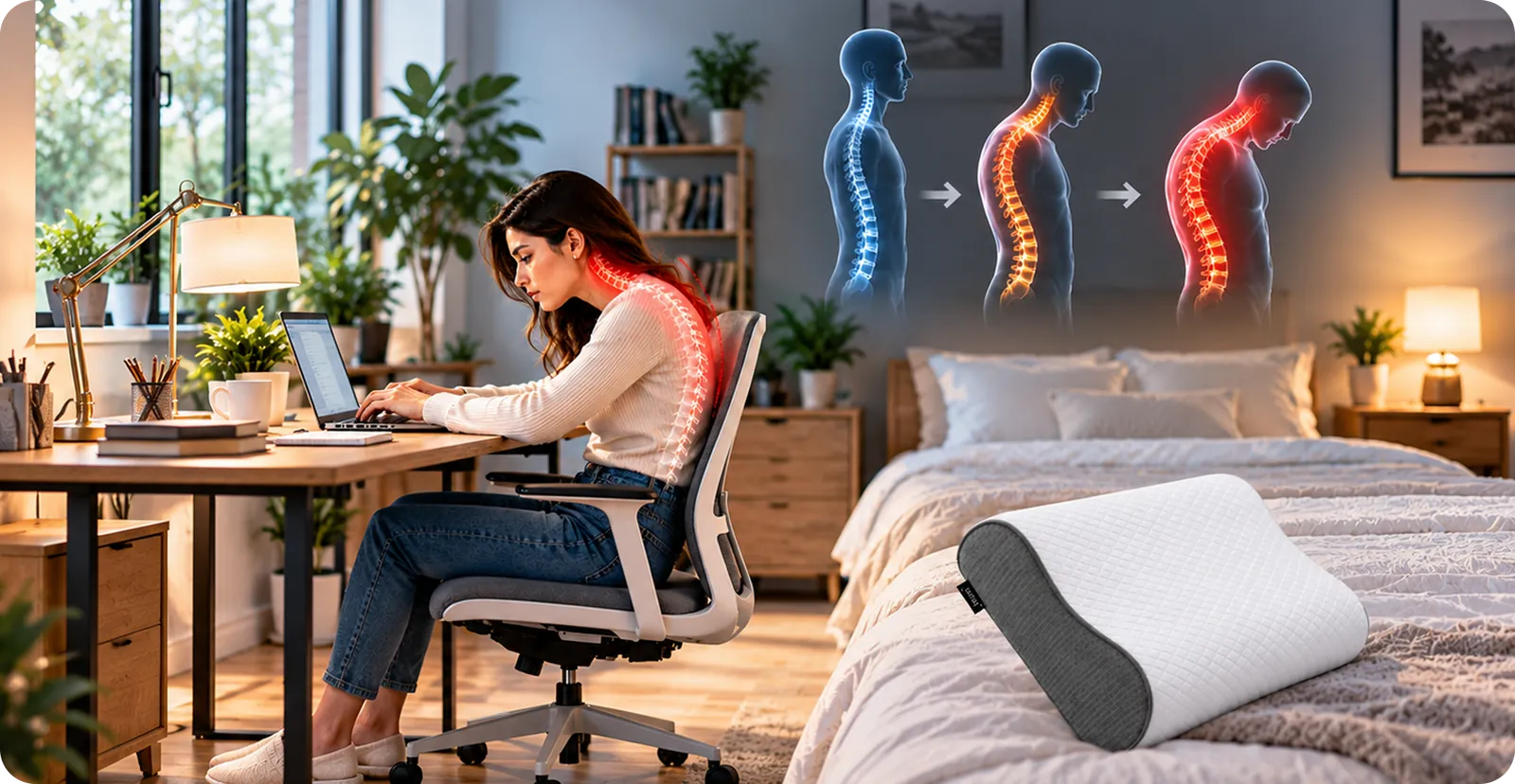
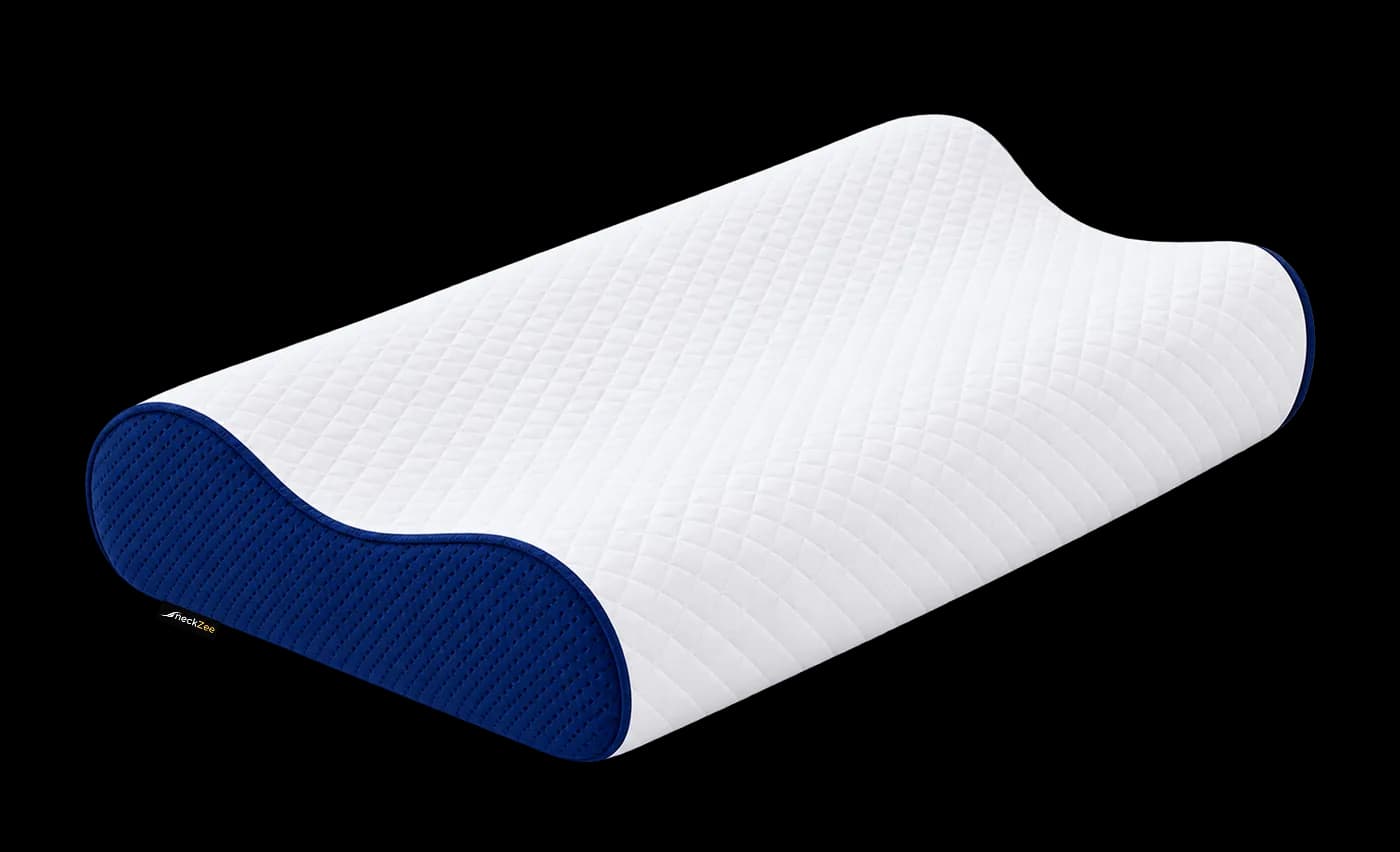
Your spine relies on sleep to decompress and recover from the day, but that process depends on proper alignment throughout the night. Choosing sleep support that matches your position and body is one of the most direct ways to help your spine do what it's naturally trying to do every night. If you've optimized your pillow but still wake up stiff, it may be worth evaluating whether your mattress is holding up its half of the alignment equation. Treating your sleep setup as a single system, rather than a single product, gives your spine the best chance at a genuinely restorative night. If you've recently changed one part of that system — a new pillow, a new mattress, even a new sleep position — give your spine a few weeks to adjust before judging whether the change is working. To keep your neck neutral overnight, an orthopedic neck pillow for sleeping supports the natural curve of your cervical spine.
While you rest, your spine is working — give it the alignment it needs to do that well.
Search Blogs
Categories


Stay Updated With Sleep Tips & Offers
Join our newsletter and get expert sleep tips, new product updates & exclusive offers.
No spam, ever. Unsubscribe anytime.

Related Blogs
Keep reading for more tips on better sleep, posture and neck comfort.
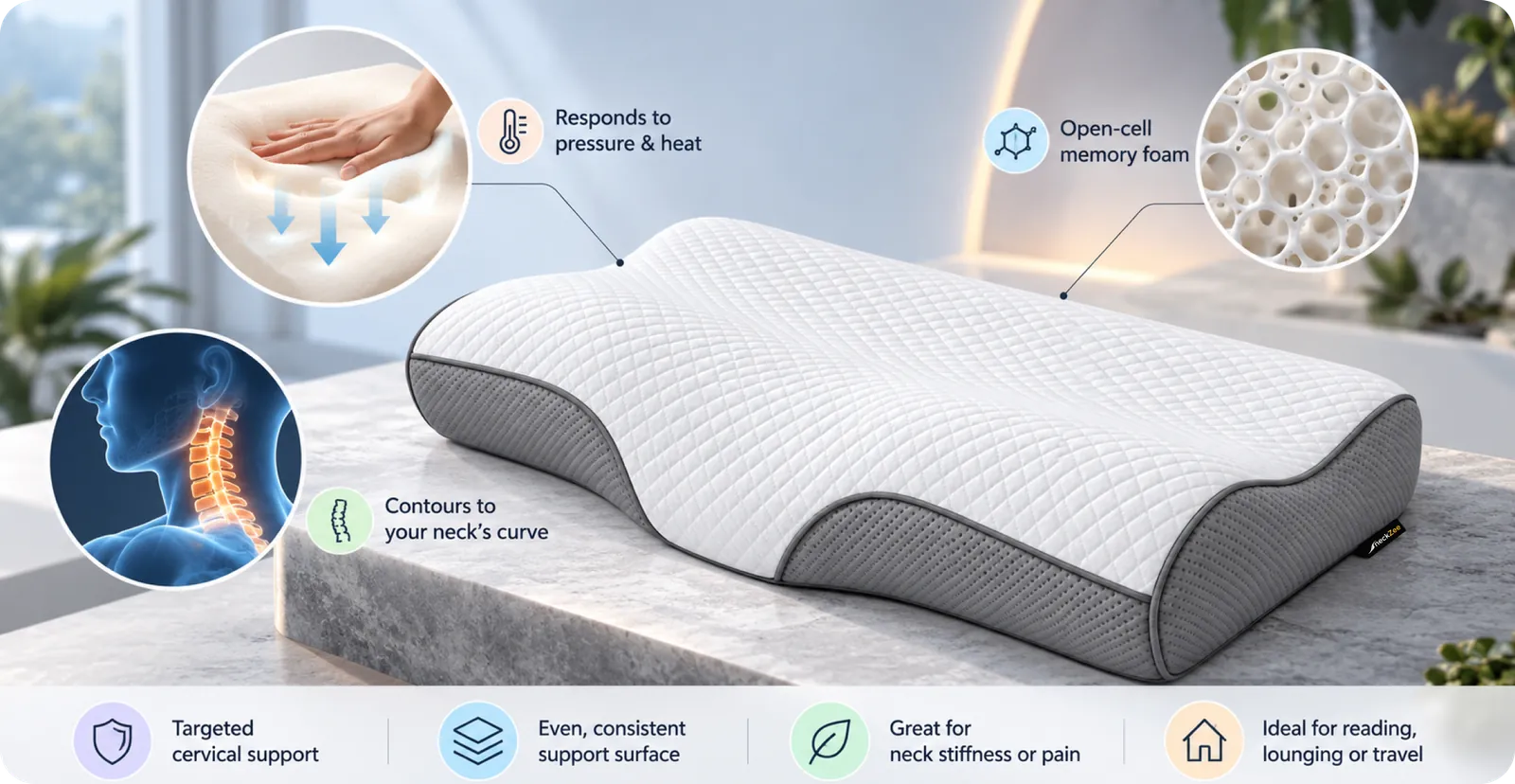
The Science Behind Memory Foam: Why It Contours to Your Body
Ever wonder how memory foam molds to your body? Explore the science behind memory foam's pressure-responsive design and why it supports better sleep.

REM vs Deep Sleep: Understanding Your Sleep Cycles
Not all sleep is equal. Learn the difference between REM and deep sleep, what each stage does for your body, and how to get more of both.

How Sleep Quality Affects Your Immune System and Daily Energy
Poor sleep does more than tire you out — it weakens immunity and drains daily energy. Learn how sleep quality impacts your health and how to improve it.

Text Neck Syndrome: Causes, Symptoms and How to Fix It
Constant phone use can cause 'text neck.' Learn the symptoms of text neck syndrome, what causes it, and practical ways to relieve and prevent it.
Frequently Asked Questions
See what our customers have to say.
Wake Up With Better Neck Support
Premium memory foam bed pillow designed for comfortable, everyday neck support and restful sleep.
Explore Bed Pillow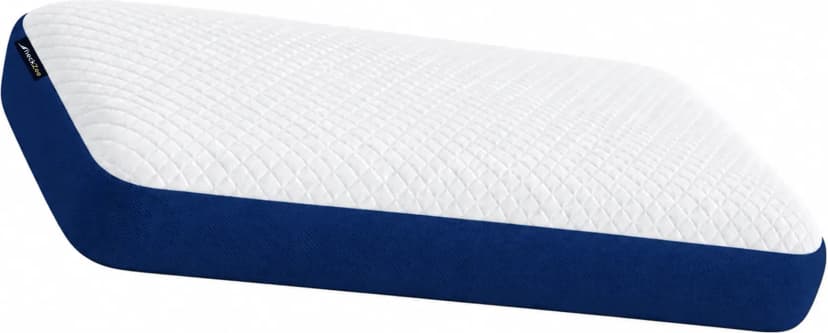

Free Shipping
Pan India

7 Days
Money Back

Secure Payment
UPI & Cards

Designed for
Better Sleep