

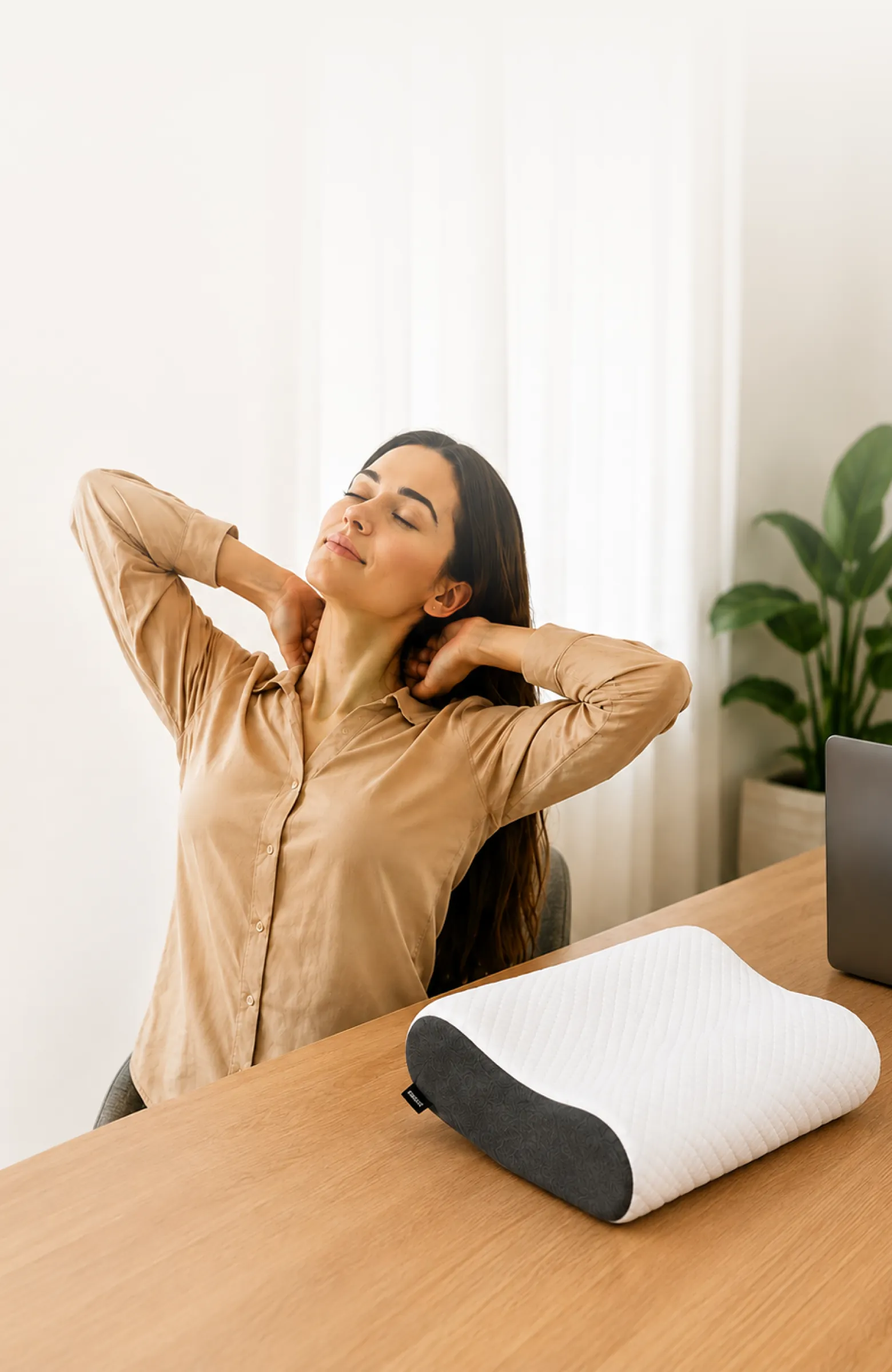
Neck Pain Relief & Better Sleep Guide
Expert tips, guides & sleep wellness advice to help you wake up refreshed every day.
Neck Pain Relief & Better Sleep Guide
Expert tips, guides & sleep wellness advice to help you wake up refreshed every day.

How Room Temperature and Pillow Choice Impact Deep Sleep
Two of the most overlooked factors in deep sleep have nothing to do with how tired you are: the temperature of your room and the pillow under your head. It also helps to know that the ideal setup can shift a little with the seasons.
Why Temperature Affects Sleep Depth
Your body's core temperature naturally drops as part of falling asleep, and it needs to stay lower to sustain deep sleep stages. A room that's too warm works against this natural process, making it harder to both fall asleep and stay in deep sleep once you get there.
Why it matters
Sleep researchers generally point to a range around 65-68°F (18-20°C) as ideal for most people, since it supports the natural temperature drop your body needs to reach and maintain deep sleep.
A room that's even a few degrees too warm can measurably reduce time spent in deep sleep.
How Pillow Choice Plays a Role Too
Temperature isn't the only environmental factor — the pillow supporting your neck directly influences how much you shift and wake throughout the night.
What to look for
- Breathable materials: Reduce heat buildup that can disrupt deep sleep.
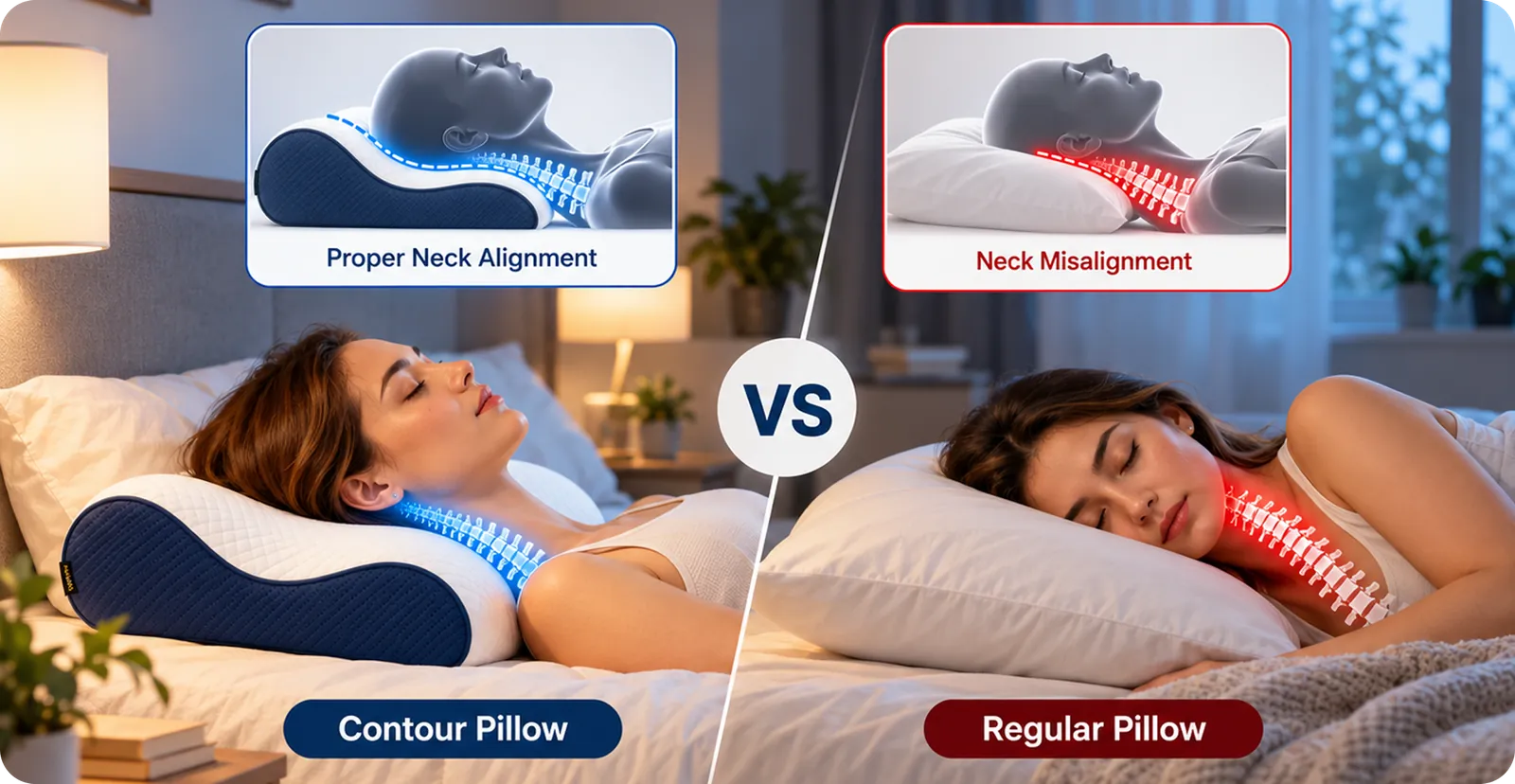
- Proper neck support: Fewer position adjustments means fewer interruptions to deep sleep.
- Appropriate loft: Matches your sleep position to avoid straining your neck.
- Consistent shape retention: A pillow that flattens quickly stops supporting you evenly through the night.
A pillow that keeps you comfortable and cool works alongside room temperature, not separately from it.
Optimizing Both Together
Temperature and pillow support work best as a combined strategy rather than addressing one in isolation.
Practical steps
Keep your bedroom cool, use breathable bedding, and choose a pillow that maintains supportive shape through the night without trapping excess heat. Together, these reduce the two most common reasons people wake — or lighten their sleep — without realizing why.
Small environmental adjustments often produce a bigger difference in sleep quality than expected.
Seasonal Adjustments Worth Making
Ideal sleep conditions shift somewhat with the seasons, and small adjustments can help maintain consistent deep sleep year-round.
Adapting through the year
- Summer: Lean on breathable bedding and a cooling pillow cover to offset warmer rooms.
- Winter: Watch for over-bundling, which can push body temperature too high overnight.
- Humidity changes: Affect how warm a room feels even at the same thermostat setting.
- Seasonal bedding swaps: Lighter or heavier layers help maintain a consistent sleep temperature.
Treating your sleep environment as something to adjust seasonally, rather than set once, helps keep deep sleep consistent throughout the year.
Pillow Materials and Temperature Regulation
Beyond room temperature, the pillow material itself plays a direct role in how warm or cool you feel throughout the night.
How materials compare
- Standard memory foam: Can retain heat due to its dense, closed structure.
- Open-cell or gel-infused foam: Designed specifically to improve airflow and reduce heat retention.
- Down and feather fill: Naturally breathable but can compress unevenly over time.
- Cooling covers: Add a layer of temperature regulation without changing the core support material.
If you tend to sleep hot, prioritizing a breathable material matters just as much as getting the room temperature right. Small environmental and material choices rarely feel dramatic in the moment, but stacked together over a full night — and repeated across hundreds of nights a year — they add up to a measurable difference in how much deep sleep you actually get. If you've optimized both temperature and pillow choice and still aren't sleeping deeply, it may be worth looking at other factors like noise, light, or an aging mattress that no longer supports your spine the way it once did when it was new.
Deep Sleep Depends on Your Environment
Deep sleep isn't purely a matter of willpower or hours in bed — it's heavily influenced by the physical conditions you sleep in. Getting room temperature and pillow support right removes two of the most common, and most fixable, barriers to consistently reaching deep sleep. A few small seasonal tweaks are often all it takes to keep your sleep environment working in your favor, no matter the time of year. Pair the right room temperature with a supportive memory foam bed pillow for sleeping for deeper, more comfortable sleep.
Deep sleep responds to your environment — get the temperature and support right, and the rest follows.
Search Blogs
Categories


Stay Updated With Sleep Tips & Offers
Join our newsletter and get expert sleep tips, new product updates & exclusive offers.
No spam, ever. Unsubscribe anytime.

Related Blogs
Keep reading for more tips on better sleep, posture and neck comfort.

How Sleep Quality Affects Your Immune System and Daily Energy
Poor sleep does more than tire you out — it weakens immunity and drains daily energy. Learn how sleep quality impacts your health and how to improve it.

Why You Wake Up Tired Even After 8 Hours of Sleep
Sleeping a full 8 hours but still waking up exhausted? Discover the hidden reasons — from sleep quality to pillow support — and how to fix them.

The Connection Between Sleep Posture and Long-Term Neck Health
Your sleep posture does more than affect comfort — it shapes your neck health for years. Learn how nightly alignment impacts pain, mobility and aging.

Sleep Hygiene 101: Small Habits That Transform Your Nights
Struggling to fall or stay asleep? These simple sleep hygiene habits — from routine to room setup — can transform your nights and how you feel each morning.
Frequently Asked Questions
See what our customers have to say.
Wake Up With Better Neck Support
Premium memory foam bed pillow designed for comfortable, everyday neck support and restful sleep.
Explore Bed Pillow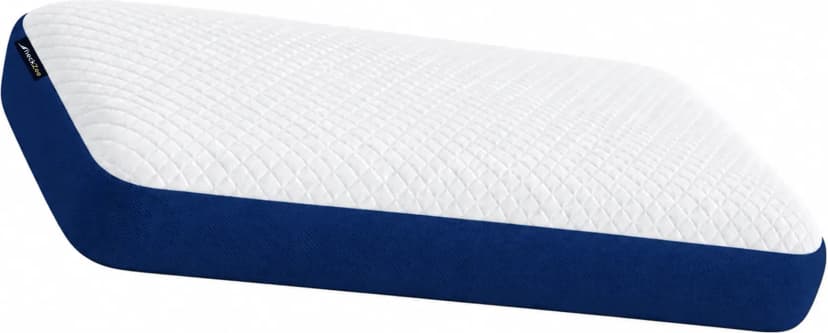

Free Shipping
Pan India

7 Days
Money Back

Secure Payment
UPI & Cards

Designed for
Better Sleep