

Neck Pain Relief & Better Sleep Guide
Expert tips, guides & sleep wellness advice to help you wake up refreshed every day.
Neck Pain Relief & Better Sleep Guide
Expert tips, guides & sleep wellness advice to help you wake up refreshed every day.
The Connection Between Sleep Posture and Long-Term Neck Health
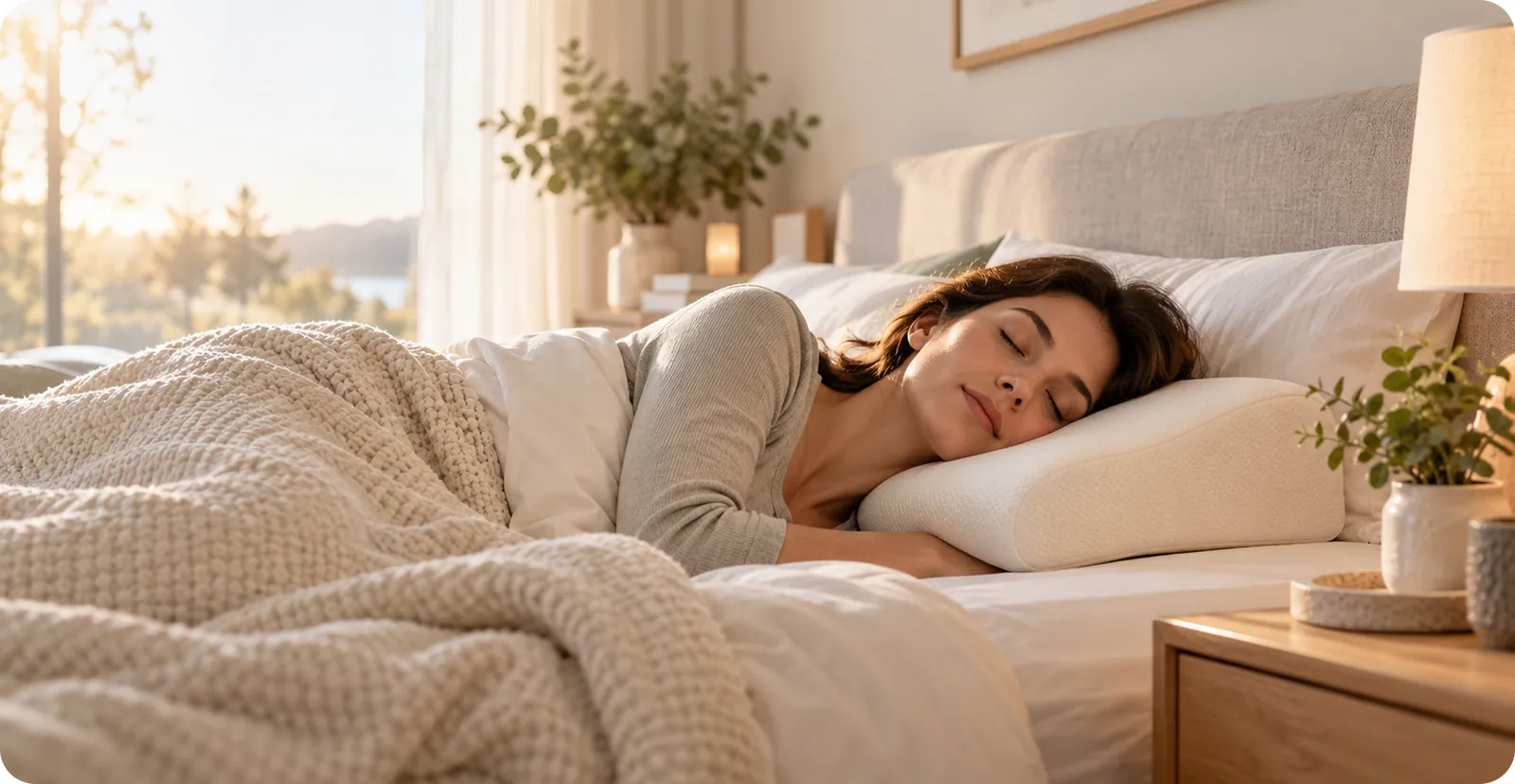
You spend roughly a third of your life asleep — which means your sleep posture has as much long-term influence on your neck as anything you do during the day. A few simple signs can tell you whether your current setup is actually doing its job.
Why Nightly Posture Matters as Much as Daytime Posture
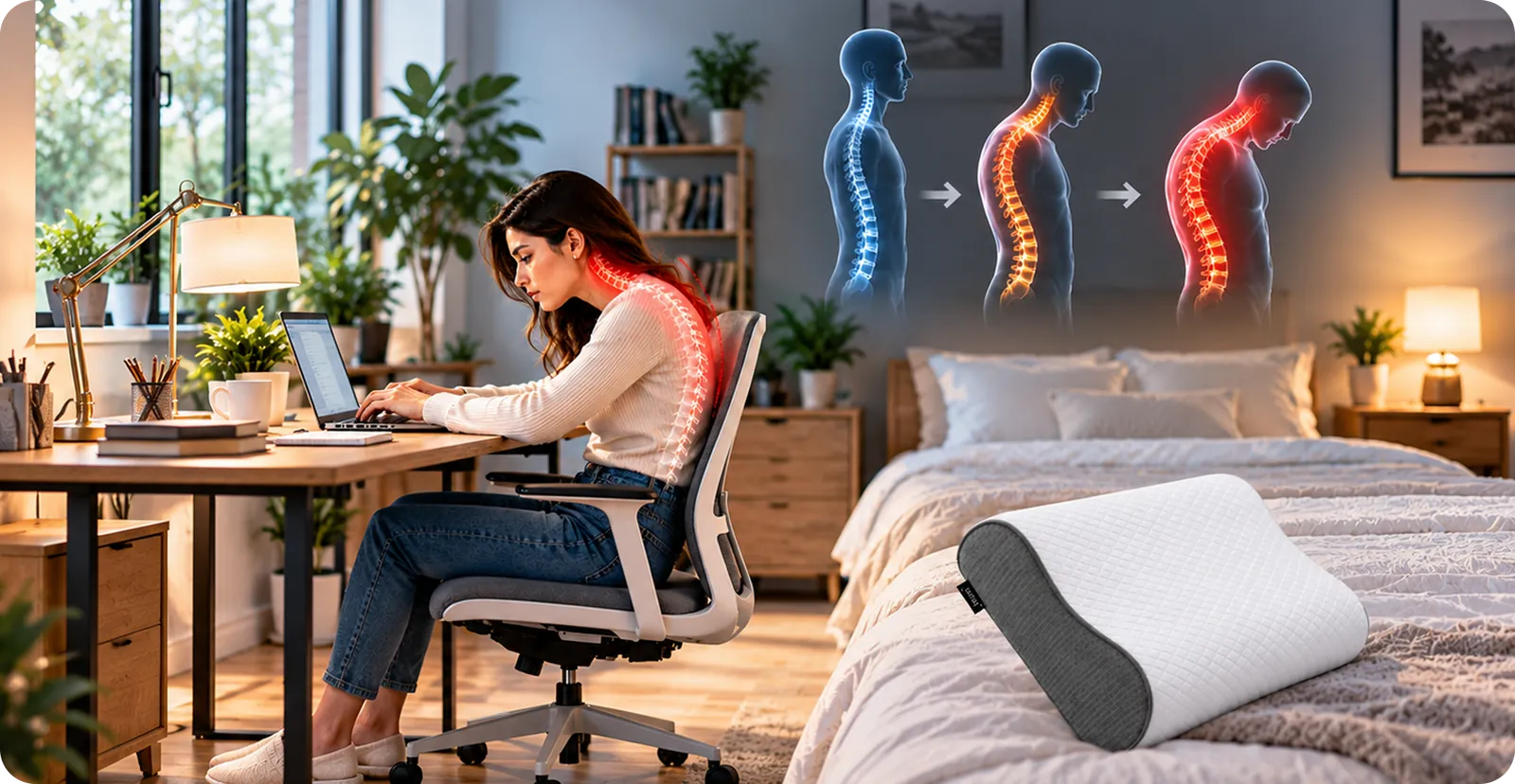
Daytime posture gets most of the attention, but the seven to nine hours you spend sleeping each night involve the same spine, held in one general position for far longer than any single desk session.
Why it matters
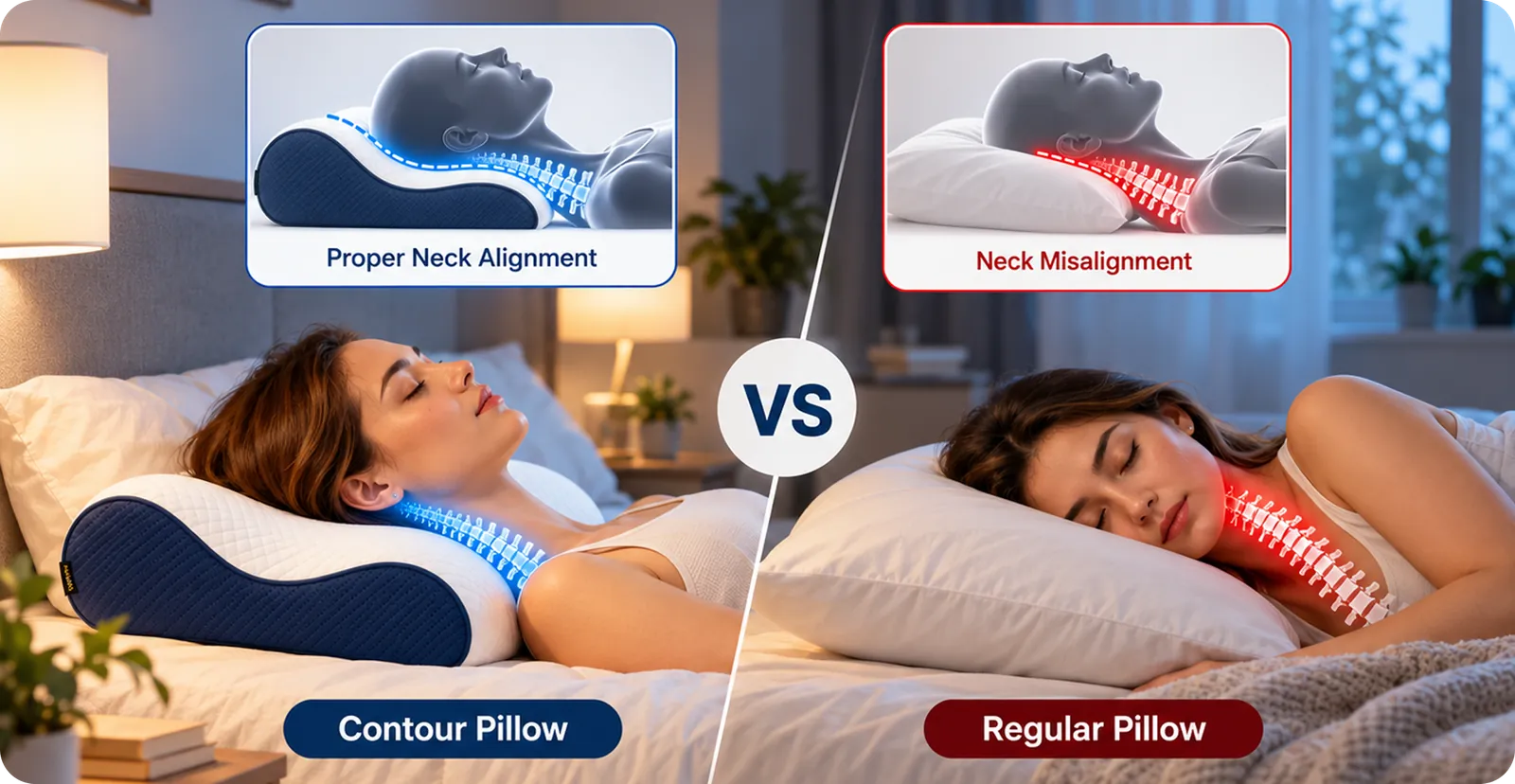
Unlike daytime posture, which you can consciously correct throughout the day, sleep posture happens automatically. If your pillow doesn't support proper alignment, hours of misalignment accumulate every single night without you noticing.
That repetition, night after night, is exactly what makes sleep posture such a significant long-term factor.
What Poor Sleep Posture Does Over Time
Consistent misalignment during sleep doesn't just cause a stiff morning — it compounds over months and years.
Long-term effects
- Chronic stiffness: Muscles adapt to hold a misaligned resting position.
- Reduced neck mobility: Range of motion gradually narrows with repeated strain.
- More frequent headaches: Cervical tension often radiates upward into tension headaches.
- Disrupted deep sleep: Discomfort causes repeated shifting, fragmenting restorative sleep stages.
Each of these tends to develop slowly, which is why the connection to sleep posture often goes unnoticed.
Supporting Better Sleep Posture Long Term
Improving sleep posture isn't about forcing yourself into a specific position — it's about giving your neck the support it needs regardless of how you naturally move at night.
What to prioritize
A pillow shaped to support your neck's natural curve, appropriate loft for your primary sleep position, and a mattress that keeps your spine level all work together. Since you can't consciously correct your posture while asleep, your sleep setup has to do that work for you.
The goal is a setup that maintains good alignment automatically, night after night, without requiring effort on your part.
How to Know If Your Current Setup Is Working
Rather than guessing, there are a few reliable signals that indicate whether your sleep posture is actually being supported well.
Signs your setup is working
- Minimal morning stiffness: Little to no neck tightness in the first few minutes after waking.
- Consistent, undisturbed sleep: Fewer instances of waking to reposition uncomfortably.
- Even wear on your pillow: No excessive flattening in one specific spot.
- Stable neck mobility: Full range of motion holds steady rather than gradually narrowing.
If several of these aren't true for you, it's a practical signal that your current pillow or sleep position needs a second look.
How Sleep Posture Interacts With Daytime Posture
Sleep posture and daytime posture don't operate independently — poor habits in one area often make the other harder to maintain.
The two-way relationship
- Daytime fatigue: Poor sleep posture leads to next-day stiffness that makes good daytime posture harder to hold.
- Muscle memory: Consistent daytime posture can reinforce more neutral resting positions at night too.
- Compounding strain: Poor posture in both areas accelerates the same underlying spinal changes.
- Combined correction: Addressing both together produces faster, more noticeable improvement than either alone.
Treating sleep and daytime posture as one connected system, rather than separate issues, tends to produce better results for both.
A Long-Term View on Neck Health
Sleep posture is easy to overlook because its effects build so gradually, but its influence on long-term neck health is significant precisely because it happens every single night. Investing in proper sleep support is one of the most consistent things you can do for your neck's health over years, not just days. Checking in on these signals every few months is a low-effort way to catch a failing setup before it turns into a chronic problem. Over years, the difference between a supported and unsupported sleep posture adds up to a meaningfully different outcome for your neck's mobility and comfort. Few single habits offer this much long-term return for so little daily effort, which is exactly why it's worth getting right sooner rather than later, not just once symptoms appear. A cervical memory foam pillow is designed to hold your neck in line whether you sleep on your side or back.
A third of your life is spent asleep — make sure that time is working for your neck, not against it.
Search Blogs
Categories
Stay Updated With Sleep Tips & Offers
Join our newsletter and get expert sleep tips, new product updates & exclusive offers.
No spam, ever. Unsubscribe anytime.

Related Blogs
Keep reading for more tips on better sleep, posture and neck comfort.
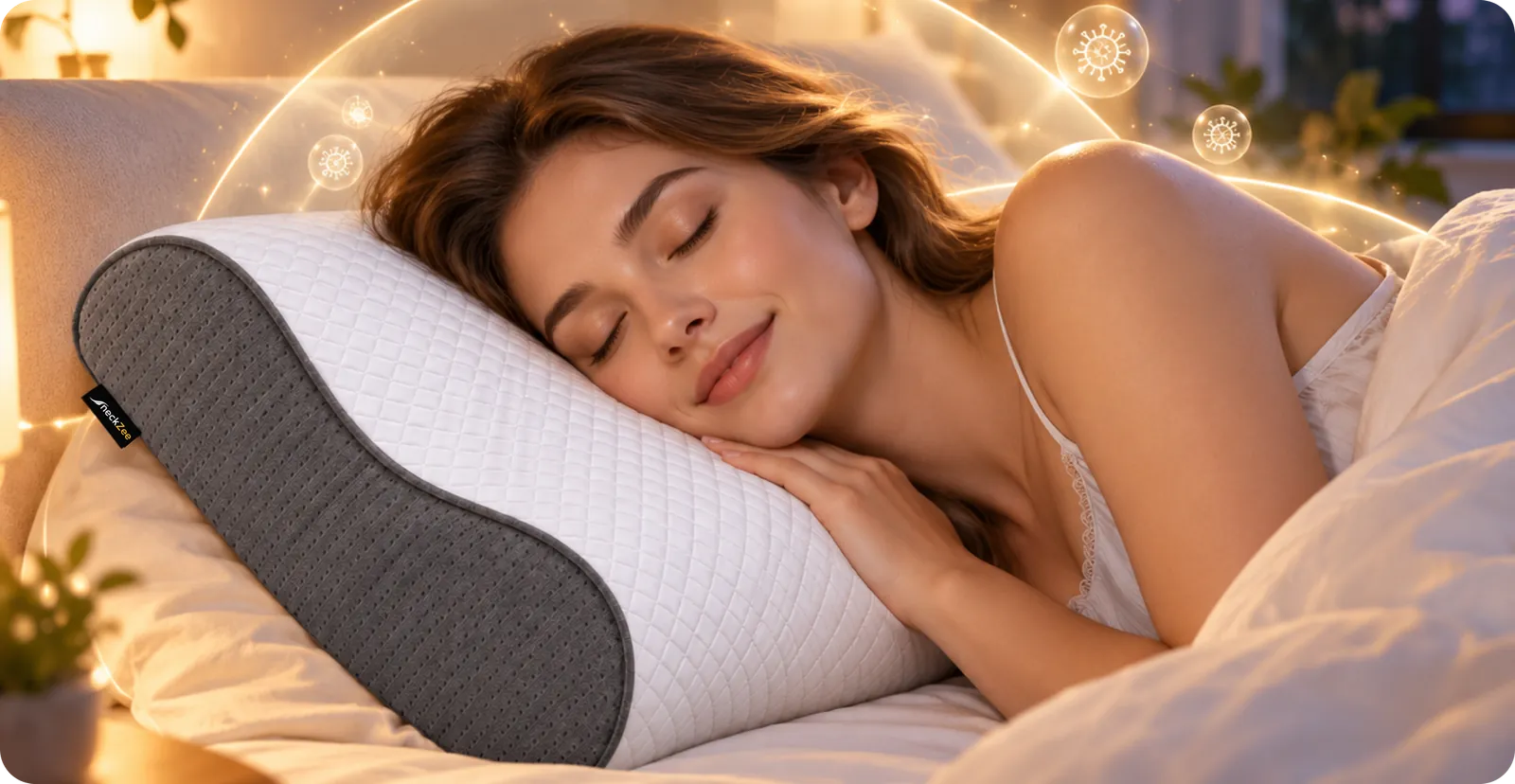
How Sleep Quality Affects Your Immune System and Daily Energy
Poor sleep does more than tire you out — it weakens immunity and drains daily energy. Learn how sleep quality impacts your health and how to improve it.

Why You Wake Up Tired Even After 8 Hours of Sleep
Sleeping a full 8 hours but still waking up exhausted? Discover the hidden reasons — from sleep quality to pillow support — and how to fix them.
Sleep Hygiene 101: Small Habits That Transform Your Nights
Struggling to fall or stay asleep? These simple sleep hygiene habits — from routine to room setup — can transform your nights and how you feel each morning.
How Room Temperature and Pillow Choice Impact Deep Sleep
Deep sleep depends on more than time in bed. See how room temperature and the right pillow work together to help your body reach restorative sleep.
Frequently Asked Questions
See what our customers have to say.
Wake Up With Better Neck Support
Premium memory foam bed pillow designed for comfortable, everyday neck support and restful sleep.
Explore Bed Pillow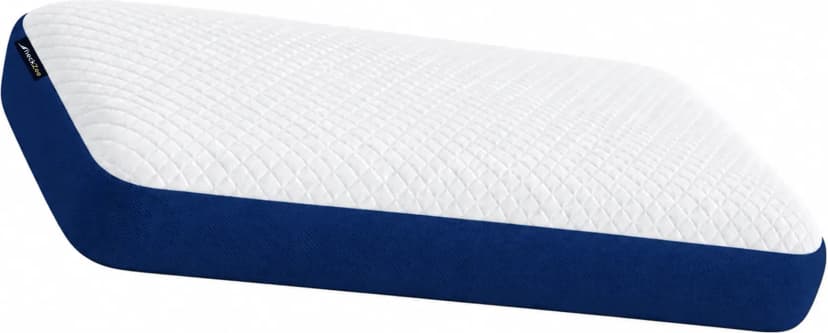

Free Shipping
Pan India

7 Days
Money Back

Secure Payment
UPI & Cards

Designed for
Better Sleep